
 How Augmented Reality Is Changing Education: The Future of Interactive Learning
How Augmented Reality Is Changing Education: The Future of Interactive Learning
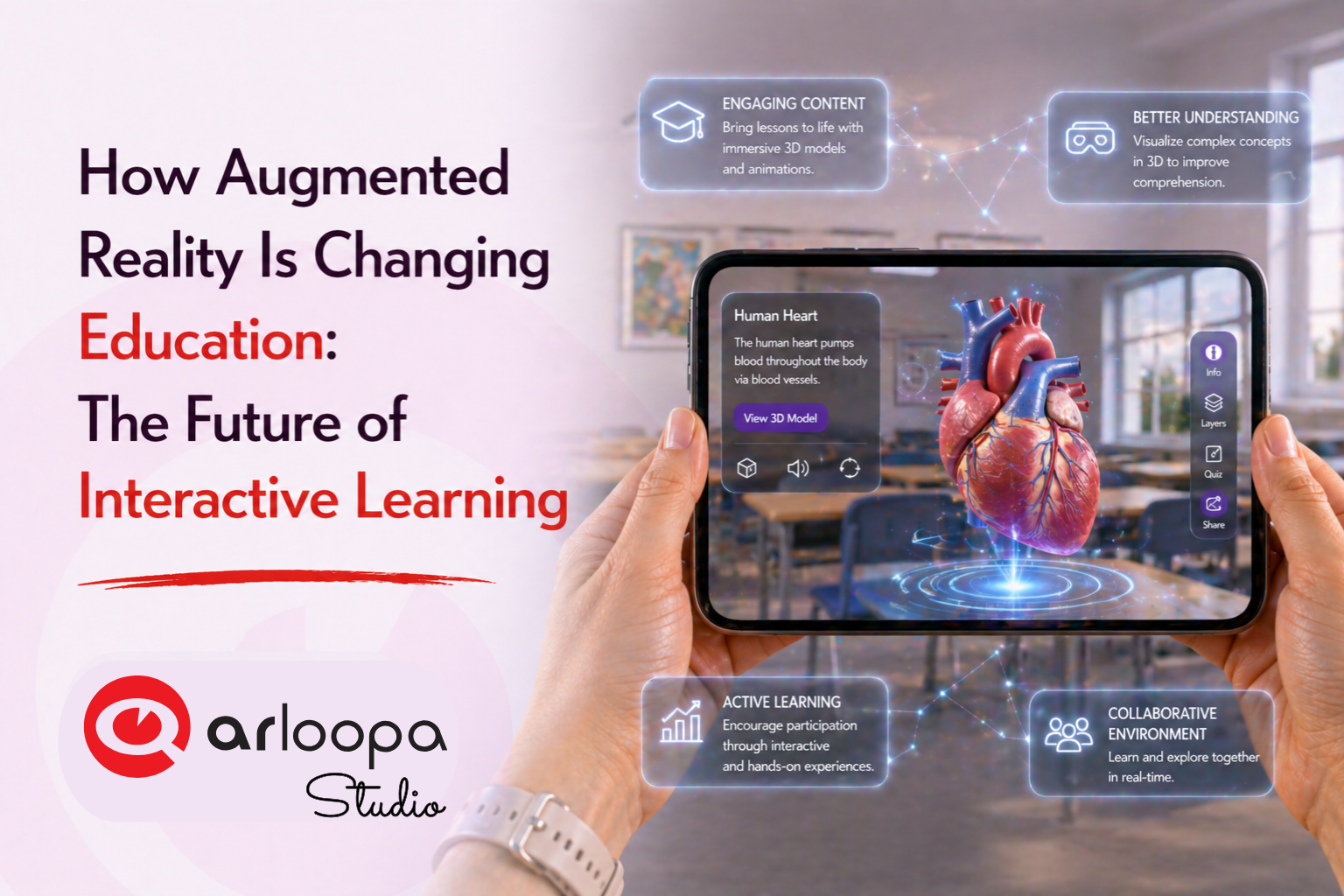
Augmented Reality (AR) is transforming the way students learn and educators teach. What was once limited to textbooks and lectures is now evolving into interactive, immersive, and engaging learning experiences powered by technology.
From 3D models in classrooms to virtual science experiments, Augmented Reality in education is making learning more visual, practical, and effective.
In this article, we explore how AR is changing education, its benefits, and why it’s becoming a key tool in modern learning environments.
What Is Augmented Reality in Education?
Augmented Reality in education refers to the use of AR technology to overlay digital content - such as 3D models, animations, and interactive elements - onto the real world through devices like smartphones or tablets.
Instead of just reading about a concept, students can:
- see it in 3D
- interact with it
- explore it from different angles
- learn through experience
This approach turns traditional learning into interactive education experiences.
1. Making Learning More Interactive and Engaging
One of the biggest challenges in education is maintaining student attention.
Augmented Reality solves this by turning lessons into interactive experiences.
For example, students can:
- explore the solar system in 3D
- interact with historical artifacts
- visualize complex scientific concepts
- participate in AR-based learning games
This level of interaction increases engagement and improves knowledge retention.
2. Visualizing Complex Concepts
Many subjects - such as science, engineering, and medicine - include concepts that are difficult to understand through text alone.
AR helps by providing visual and interactive representations.
Students can:
- examine human anatomy in 3D
- observe chemical reactions virtually
- understand physics concepts through simulations
- explore architectural designs
This makes learning more intuitive and easier to understand.
3. Enhancing Remote and Digital Learning
With the rise of online education, AR plays a key role in making remote learning more effective.
Instead of passive video lessons, students can engage with:
- interactive AR models
- virtual lab simulations
- immersive learning environments
This bridges the gap between physical classrooms and digital education.
4. Learning Through Experience
AR supports experiential learning, where students learn by doing rather than just observing.
For example:
- medical students can practice procedures virtually
- engineering students can assemble digital models
- history students can experience past events through AR storytelling
This hands-on approach improves understanding and practical skills.
5. Increasing Accessibility in Education
Augmented Reality can make education more accessible to a wider audience.
Students from different locations can access the same AR experiences through their smartphones, removing barriers related to:
- physical resources
- location
- equipment availability
This makes AR a powerful tool for inclusive and accessible education.
6. Gamification of Learning
AR introduces elements of gamification, making learning more fun and motivating.
Educational AR experiences can include:
- quizzes and challenges
- reward systems
- interactive missions
- AR treasure hunts
Gamified learning encourages participation and helps students stay motivated.
7. AR in Classrooms and Beyond
Augmented Reality is not limited to classrooms. It can be used in:
Schools
Interactive lessons and visual learning tools
Universities
Advanced simulations and research applications
Training Programs
Professional and technical skill development
Museums and Cultural Education
Interactive storytelling and historical exploration
Benefits of Augmented Reality in Education
Improved Engagement
Interactive experiences keep students interested and involved.
Better Understanding
Visual learning helps simplify complex topics.
Higher Retention
Students remember information better through experience.
Practical Learning
Hands-on interaction improves skill development.
The Future of AR in Education
As AR technology continues to evolve, we can expect even more advanced applications in education.
Future trends include:
- AI-powered personalized learning
- AR-powered smart classrooms
- wearable AR devices for students
- fully immersive educational environments
These innovations will redefine how knowledge is delivered and experienced.
Create Educational AR Experiences with ARLOOPA Studio
If you want to build interactive learning experiences, ARLOOPA Studio provides tools for creating educational AR content.
With ARLOOPA Studio, you can develop:
- interactive textbooks
- AR learning modules
- educational games
- immersive storytelling experiences
- training simulations
All without complex coding.
Augmented Reality is changing education by making learning more interactive, visual, and engaging.
By transforming traditional teaching methods into immersive experiences, AR helps students better understand complex concepts and stay motivated throughout the learning process.
As technology continues to evolve, Augmented Reality will play a central role in shaping the future of education.


See more articles



Solutions