
 The Future of Augmented Reality: Top Trends to Watch
The Future of Augmented Reality: Top Trends to Watch
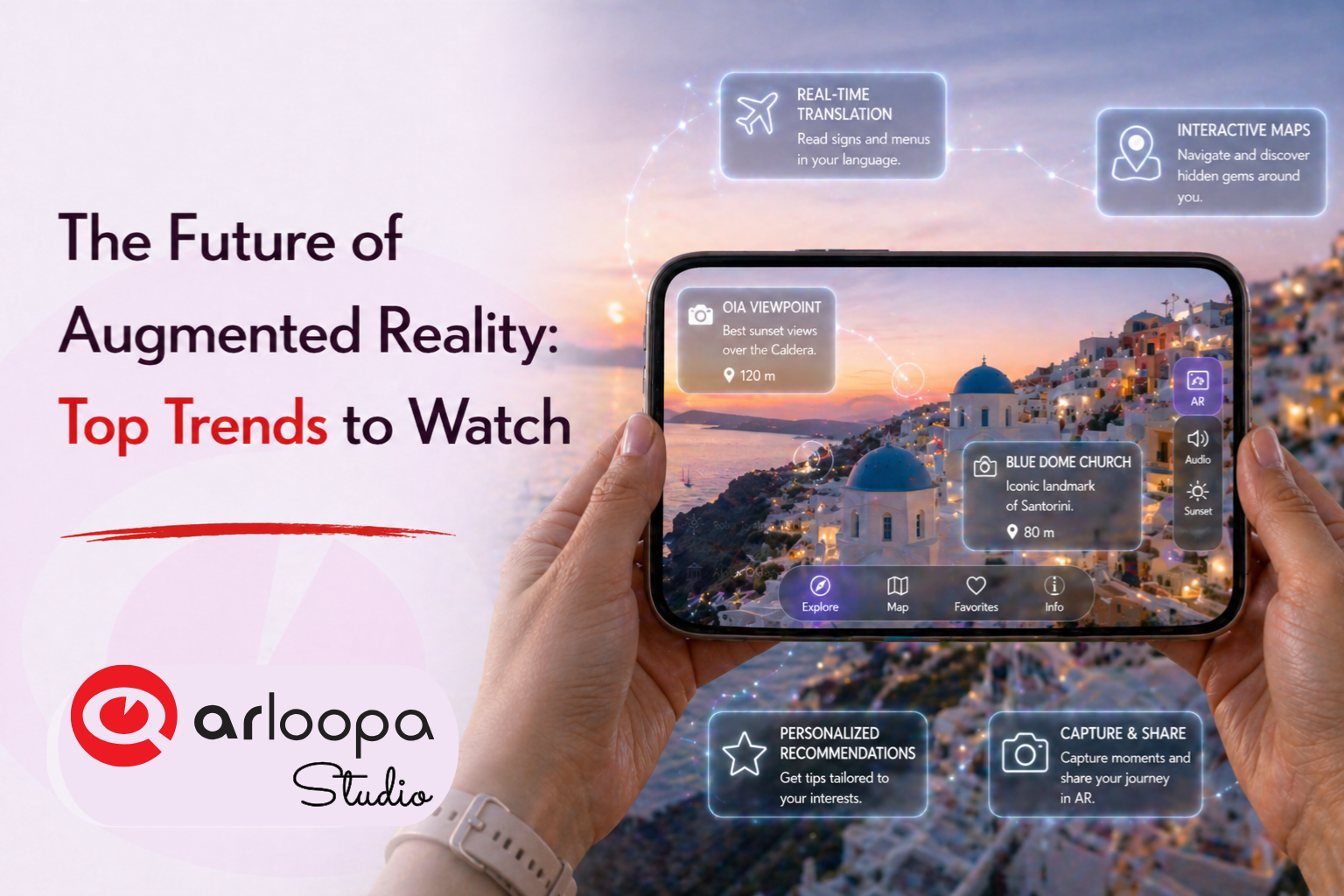
Augmented Reality (AR) has already transformed how we interact with digital content, from social media filters to immersive marketing campaigns. But what we see today is just the beginning.
As technology continues to evolve, the future of augmented reality promises even more immersive, intelligent, and widely adopted experiences across industries.
In this article, we explore the top augmented reality trends shaping the future of AR technology and how businesses can prepare for what’s coming next.
1. AR Becoming Part of Everyday Life
Augmented Reality is rapidly moving from novelty to necessity.
With billions of smartphones supporting AR, users are already interacting with AR through:
- social media filters
- mobile apps
- navigation tools
- shopping experiences
In the future, AR will become even more integrated into daily life, seamlessly blending digital content with the real world.
2. Rise of AR Glasses and Wearables
While smartphones dominate AR today, the future lies in AR glasses and wearable devices.
Tech companies are actively developing lightweight AR glasses that will allow users to:
- access information hands-free
- navigate environments with visual overlays
- interact with digital content in real time
This shift will make AR more natural and immersive, reducing the need to hold a device.
3. More Realistic and Immersive AR Experiences
Advancements in 3D rendering, computer vision, and spatial computing are making AR experiences more realistic than ever.
Future AR will feature:
- highly detailed 3D objects
- realistic lighting and shadows
- better object interaction
- seamless integration with real environments
This will make digital content feel like a true part of the physical world.
4. AI-Powered Augmented Reality
Artificial Intelligence (AI) is playing a major role in the future of AR.
AI will enhance AR experiences by enabling:
- smarter object recognition
- real-time personalization
- voice and gesture interaction
- predictive user experiences
Combining AI with AR will create intelligent, adaptive environments that respond to users in real time.
5. AR in E-Commerce and Retail
Retail is one of the fastest-growing areas for augmented reality.
In the future, AR shopping experiences will allow customers to:
- try products virtually
- visualize items in their space
- receive personalized recommendations
- interact with products in 3D
AR will bridge the gap between online and offline shopping, creating more confident and engaging purchasing experiences.
6. Expansion of AR in Education and Training
Augmented Reality is transforming how people learn.
Future AR applications in education will include:
- interactive 3D lessons
- immersive historical experiences
- real-time simulations
- hands-on virtual training
AR will make learning more engaging, practical, and accessible across different fields.
7. AR in Tourism and Cultural Experiences
Tourism is becoming more interactive thanks to AR.
Future AR travel experiences will include:
- real-time guided tours
- historical reconstructions at landmarks
- interactive storytelling in cities
- personalized travel experiences
AR will allow travelers to explore destinations in deeper and more meaningful ways.
8. Location-Based AR Experiences
Location-based AR is expected to grow significantly.
These experiences use GPS and real-world mapping to place digital content in specific locations.
Future applications include:
- city-wide AR games
- interactive public installations
- AR navigation systems
- immersive event experiences
This will turn entire cities into interactive digital environments.
9. AR in Marketing and Advertising
Marketing will continue to evolve with AR.
Brands will increasingly use AR to create:
- interactive campaigns
- immersive product storytelling
- gamified marketing experiences
- personalized advertisements
AR advertising allows brands to move beyond passive content and create engaging, interactive experiences.
10. The Rise of the AR Cloud
One of the most exciting developments is the AR Cloud - a shared digital layer mapped onto the real world.
The AR Cloud will allow:
- persistent AR experiences across devices
- shared interactions between users
- real-time updates to digital environments
This means that AR content will remain anchored to real-world locations and accessible to multiple users simultaneously.
Why Businesses Should Pay Attention to AR Trends
Augmented Reality is no longer a future concept—it is becoming a key driver of digital transformation.
Businesses that adopt AR early can:
- increase customer engagement
- create innovative marketing campaigns
- stand out from competitors
- offer unique user experiences
As AR technology becomes more accessible, it will become an essential tool for brands across industries.
Build the Future with ARLOOPA Studio
If you want to be part of the future of augmented reality, platforms like ARLOOPA Studio make it easy to create immersive AR experiences.
With ARLOOPA Studio, you can build:
- AR marketing campaigns
- interactive educational content
- AR tourism experiences
- product visualizations
- immersive storytelling projects
All without complex coding.
The future of Augmented Reality is full of exciting possibilities.
From AR glasses and AI-powered experiences to immersive tourism and interactive marketing, AR is set to redefine how we interact with digital content.
As technology continues to evolve, one thing is clear:
Augmented Reality will become a core part of how we experience the world.


See more articles



Solutions