
 WebAR Trends to Watch in 2026
WebAR Trends to Watch in 2026
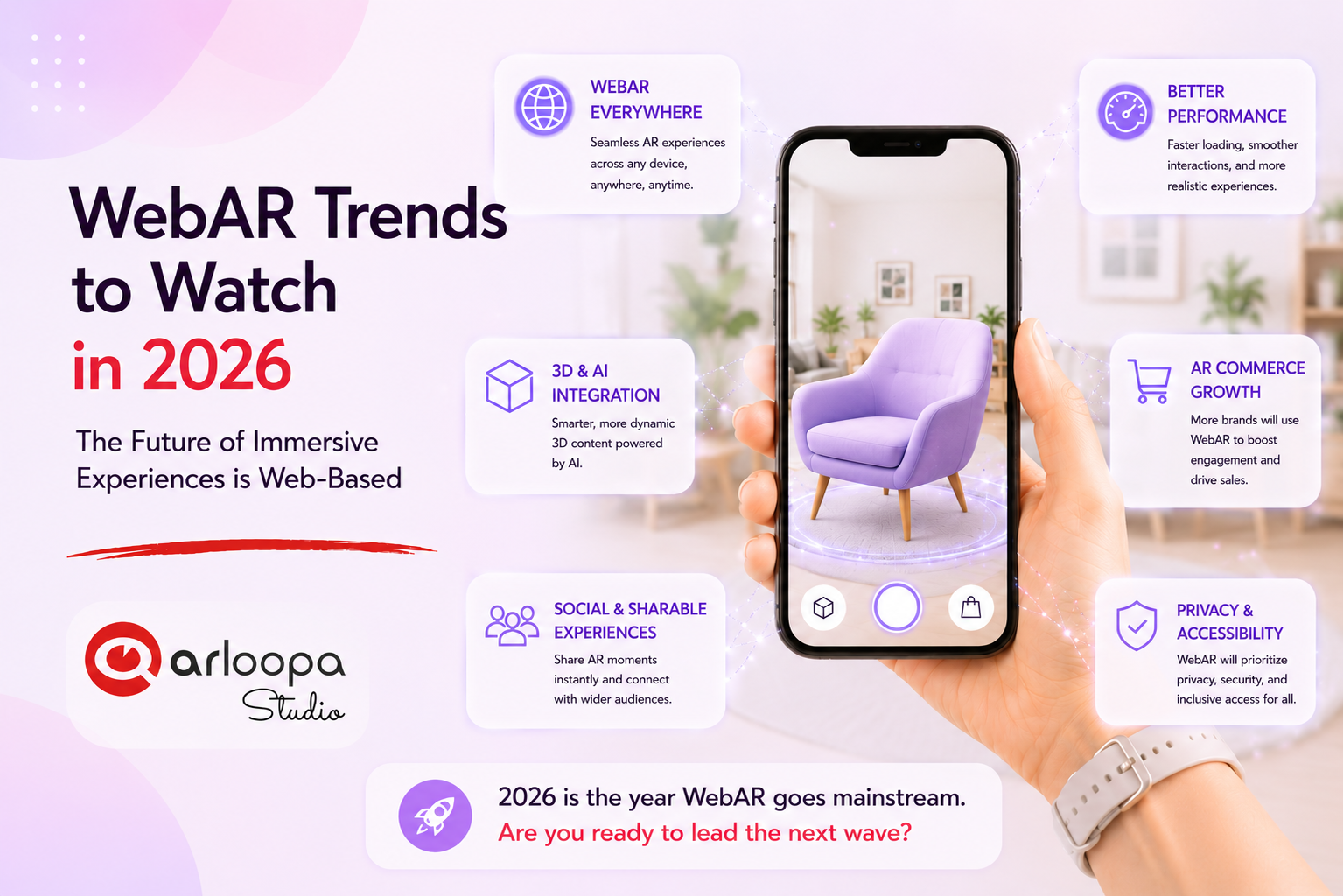
WebAR has evolved from an experimental technology into a practical business tool for marketing, ecommerce, education, and customer engagement. By allowing augmented reality experiences to run directly in a mobile browser, WebAR removes the friction of app downloads and makes immersive content instantly accessible.
In 2026, WebAR is becoming faster, smarter, and more integrated into everyday digital experiences. Businesses are using it not just as a novelty, but as a measurable channel for increasing conversions, reducing returns, and creating memorable customer interactions.
In this article, we explore the most important WebAR trends shaping the future of browser-based augmented reality.
1. AI-Powered WebAR Experiences
Artificial intelligence is transforming how WebAR content is created and personalized.
AI can now help businesses:
- Generate 3D models from images or text prompts
- Personalize AR experiences based on user behavior
- Enable voice-driven interactions
- Automate content recommendations
This reduces production time and makes AR experiences more dynamic and relevant to each user. The convergence of AI and AR is one of the biggest shifts in immersive technology.
2. WebAR as a Core Ecommerce Tool
WebAR is becoming a standard feature in online shopping.
Retailers are using browser-based AR for:
- Product visualization
- Virtual try-on
- Interactive packaging
- 3D product configurators
These experiences help customers better understand products before purchasing, which increases confidence and can significantly improve conversion rates while reducing returns. Shopify and industry analyses continue to highlight strong commercial results from AR-enabled product experiences.
3. Geospatial WebAR
Geospatial WebAR anchors digital content to specific real-world locations, enabling city-scale and location-based experiences.
Use cases include:
- Tourism guides
- Outdoor exhibitions
- Retail activations
- Navigation overlays
- Location-based games
This trend expands AR beyond individual products and into shared public experiences.
4. Smarter Interactive Packaging
In 2026, more brands are turning product packaging into a digital touchpoint.
By scanning a QR code or package design, customers can unlock:
- Product tutorials
- Brand storytelling
- Loyalty rewards
- Games and contests
- Authentication experiences
WebAR packaging is especially effective in cosmetics, food and beverage, and consumer packaged goods.
5. Hyper-Realistic 3D Product Visualization
Advances in mobile graphics, compressed 3D formats such as glTF, and better browser rendering are making WebAR visuals more realistic.
Customers can now view highly detailed products with accurate scale, materials, and lighting directly in their browsers.
This is particularly valuable for:
- Furniture and home decor
- Jewelry
- Electronics
- Luxury goods
The gap between native apps and browser-based experiences continues to narrow.
6. Gamification and Interactive Storytelling
Brands are increasingly using WebAR to create engaging, shareable experiences rather than simple 3D viewers.
Examples include:
- Treasure hunts
- Interactive characters
- AR photo effects
- Educational experiences
- Story-driven campaigns
Gamified WebAR increases time spent with the brand and encourages social sharing.
7. Better Cross-Browser Compatibility
Web standards such as WebXR continue to improve, making WebAR more consistent across devices and browsers.
This means:
- More reliable performance
- Broader device support
- Easier maintenance
- Greater scalability
As compatibility improves, businesses can deploy AR to larger audiences with less technical complexity.
8. WebAR and Spatial Computing Convergence
WebAR is becoming part of a broader spatial computing ecosystem that includes smartphones, headsets, and future smart glasses.
By building experiences with web standards, businesses can prepare their 3D assets and content for emerging devices and platforms.
9. Stronger Analytics and ROI Measurement
Businesses are demanding measurable results from immersive campaigns.
Modern WebAR solutions can track:
- Views and sessions
- Interaction rates
- Conversion events
- Product placements
- Shares and repeat visits
These insights help marketers optimize campaigns and demonstrate return on investment.
10. Faster, Lighter WebAR Experiences
Performance optimization is becoming a strategic priority.
Key techniques include:
- Compressed 3D assets
- Progressive loading
- Efficient textures
- CDN delivery
The result is faster load times and smoother experiences, especially on mobile devices and slower networks.
How ARLOOPA Studio Helps Businesses Stay Ahead
ARLOOPA Studio creates custom WebAR experiences for brands across retail, real estate, education, tourism, and events.
Services include:
- Product visualization
- Virtual try-on
- Interactive packaging
- Geolocation-based AR
- 3D model optimization
- Analytics integration
Whether you are launching a marketing campaign or building an immersive ecommerce experience, ARLOOPA Studio can help you leverage the latest WebAR innovations.
Ready to Build the Future with WebAR?
If you want to create high-performance WebAR experiences that engage customers and deliver measurable results, ARLOOPA Studio can help.
Turn your products, packaging, and campaigns into immersive experiences that customers can access instantly from any browser.


See more articles



Solutions