




 Top 5 Mistakes People Make When Creating Their First AR Experience
Top 5 Mistakes People Make When Creating Their First AR Experience
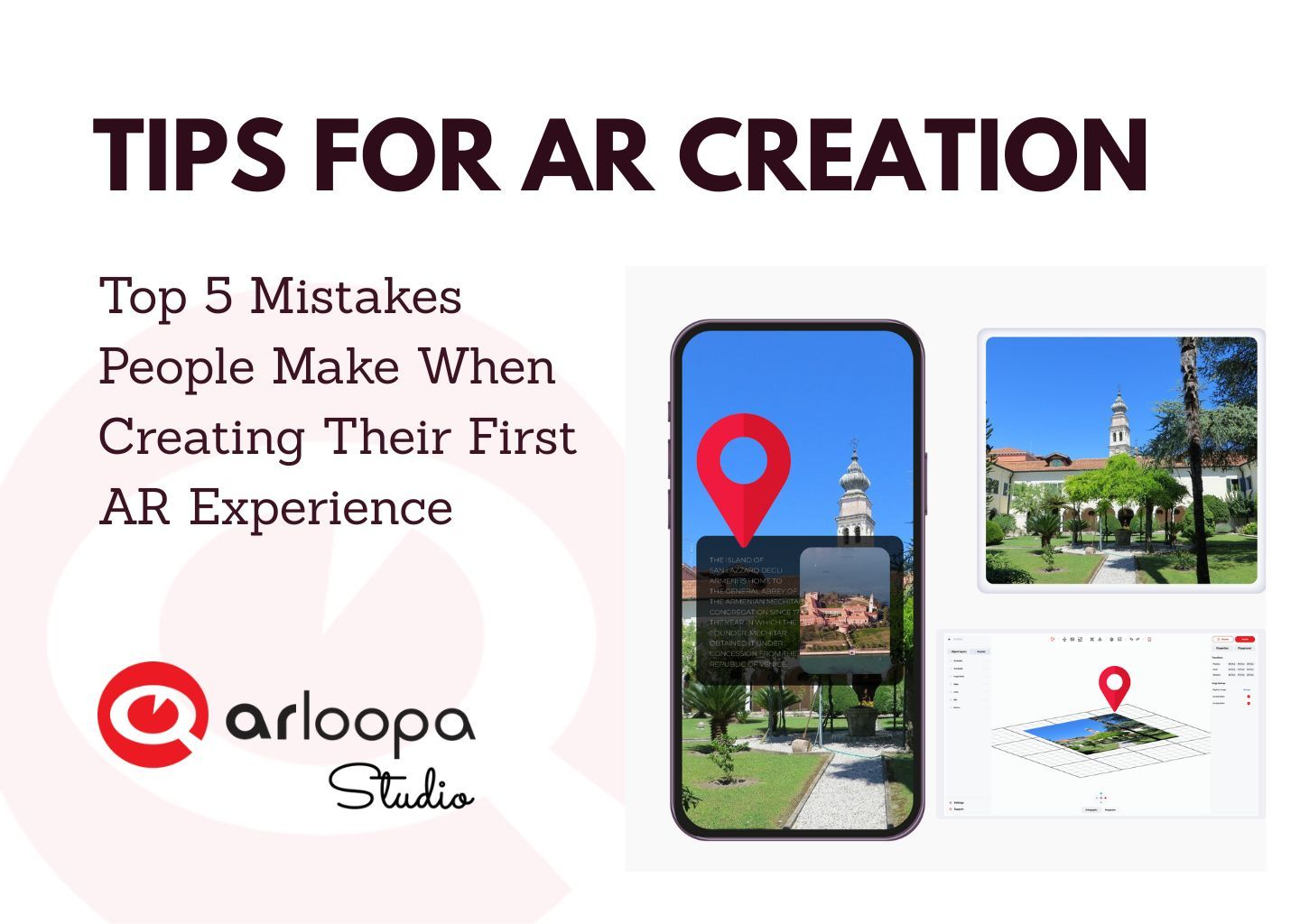
Augmented Reality (AR) is no longer a futuristic concept - it’s a practical tool used in education, marketing, museums, tourism, retail, and storytelling. Thanks to no-code AR platforms, creating your first AR experience has never been easier.
And yet… many first AR projects fail to impress users or deliver real value.
If you’re just starting out, here are the most common mistakes people make when creating their first AR experience - and how to avoid them.
1. Focusing on Technology Instead of the User
One of the biggest beginner mistakes in AR development is obsessing over effects, animations, and 3D models instead of the user experience.
AR is not about showing what technology can do - it’s about solving a problem or telling a story.
❌ Mistake:
“Let’s add spinning objects, sound effects, and animations just because we can.”
✅ Better approach:
Ask yourself:
- What should the user feel?
- What action should they take?
- What value does AR add here?
2. Creating AR Without a Clear Purpose
Many first-time creators jump straight into building without defining why the AR experience exists.
AR without a goal feels like a gimmick.
❌ Mistake:
“We want AR because it’s trendy.”
✅ Better approach:
Define one clear purpose:
- Educate
- Entertain
- Guide
- Promote
- Tell a story
Every AR element should support that purpose.
3. Overloading the Scene With Too Many Elements
More does not mean better - especially in AR.
Cluttered AR scenes confuse users, overload devices, and often lead to poor performance.
❌ Mistake:
Adding too many 3D objects, buttons, texts, and animations in one scene.
✅ Better approach:
Start small:
- 1–3 key elements
- Clear visual hierarchy
- One main interaction
Simple AR experiences often feel more magical than complex ones.
4. Ignoring Real-World Environment Constraints
AR lives in the real world, not on a flat screen - and many beginners forget that.
Lighting, surface detection, space size, and user movement all matter.
❌ Mistake:
Designing AR only on a desktop screen.
✅ Better approach:
Test your AR experience:
- Indoors and outdoors
- In different lighting conditions
- On multiple devices
Design for real environments, not ideal ones.
5. Using Heavy or Unoptimized Assets
Large 3D models and uncompressed textures are a common beginner trap.
❌ Mistake:
Uploading high-poly models straight from 3D software.
✅ Better approach:
Optimize assets:
- Reduce polygon count
- Compress textures
- Use recommended file formats and sizes
This improves loading speed, performance, and user retention.
Start Simple, Think Human
Your first AR experience doesn’t need to be perfect - but it does need to be meaningful.
The most successful augmented reality projects:
- Put humans before technology
- Solve one clear problem
- Keep experiences simple and intuitive
- Respect real-world context
If you avoid these common mistakes, you’re already ahead of most first-time AR creators.


See more articles



Solutions