



 Augmented Reality for Restaurants: How AR Menus Are Transforming the Dining Experience
Augmented Reality for Restaurants: How AR Menus Are Transforming the Dining Experience
The restaurant industry is constantly evolving as businesses look for new ways to attract customers and enhance the dining experience. One technology that is rapidly gaining attention in the food industry is Augmented Reality (AR).
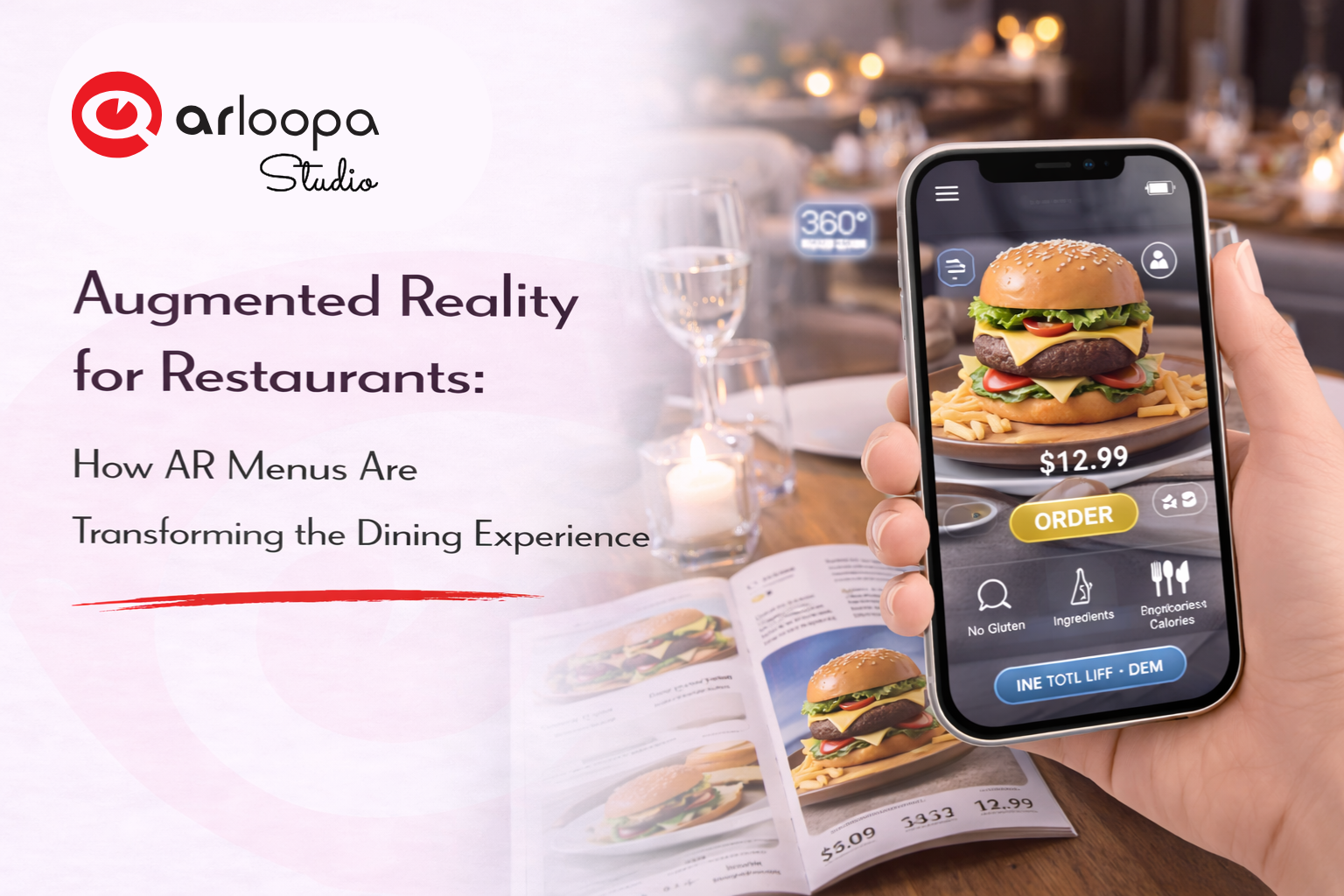
From interactive menus to 3D food visualization, augmented reality allows restaurants to present their dishes in a more engaging and informative way. Instead of simply reading menu descriptions, customers can see digital previews of meals directly on their table through their smartphones.
In this article, we’ll explore how augmented reality menus work and how AR technology can benefit restaurants and cafes.
What Is an Augmented Reality Menu?
An Augmented Reality menu is a digital experience that allows customers to view interactive content when they scan a printed menu, QR code, or table marker using their smartphone.
When the AR experience is activated, customers can see:
- 3D models of dishes
- animations of meals appearing on the table
- ingredient information
- nutritional details
- preparation videos
This transforms a traditional menu into an interactive digital experience that helps customers better understand what they are ordering.
1. 3D Food Visualization
One of the biggest advantages of AR menus is the ability to visualize dishes in 3D before ordering.
Customers can see realistic digital models of meals directly on their table through their phone camera.
This allows them to:
- understand portion sizes
- see the presentation of the dish
- explore ingredients more closely
For many customers, seeing a dish visually makes it easier to decide what to order.
2. Improved Customer Experience
Restaurants are increasingly competing not only on food quality but also on customer experience.
Augmented Reality adds an interactive and memorable element to dining.
Guests can interact with digital elements, explore menu items in a fun way, and discover additional information about the restaurant or dishes.
This makes dining more engaging and can encourage customers to share the experience on social media.
3. Faster and More Confident Ordering
Menu descriptions sometimes make it difficult for customers to imagine what a dish looks like.
AR menus solve this problem by allowing customers to see a realistic representation of the food before ordering.
This helps customers:
- choose dishes more quickly
- avoid confusion about unfamiliar meals
- feel more confident about their selection
As a result, AR menus can improve the overall ordering process.
4. Interactive Restaurant Storytelling
Augmented Reality menus can also be used to tell the story behind the restaurant and its dishes.
When customers scan a menu item, they might see:
- videos of chefs preparing the dish
- information about ingredient origins
- the cultural history of the meal
- behind-the-scenes kitchen moments
This storytelling approach helps restaurants build stronger connections with customers.
5. Powerful Marketing Tool
AR menus are not only useful for customers—they are also a powerful restaurant marketing tool.
Restaurants can use AR experiences to:
- promote new dishes
- highlight seasonal menus
- offer interactive promotions
- provide loyalty rewards
Because AR experiences are unique and engaging, customers are more likely to talk about them and share them online.
6. Contactless and Digital-Friendly Dining
Since the pandemic, many restaurants have adopted contactless menu solutions using QR codes.
Augmented Reality menus can easily integrate with this system.
Instead of simply opening a digital menu page, customers can access interactive AR food previews that enhance the digital dining experience.
This keeps menus modern while maintaining convenience and hygiene.
Benefits of Augmented Reality for Restaurants
Restaurants that adopt AR technology can gain several advantages.
Increased Customer Engagement
Interactive experiences keep guests engaged and interested in exploring menu items.
Better Menu Presentation
3D food previews help customers visualize dishes more clearly.
Unique Dining Experience
AR makes restaurants stand out by offering innovative and memorable experiences.
Social Media Exposure
Customers often share AR experiences online, increasing brand visibility.
The Future of AR in the Restaurant Industry
As augmented reality technology continues to evolve, restaurants may introduce even more immersive dining experiences.
Future AR restaurant innovations may include:
- interactive dining tables
- AR cooking demonstrations
- personalized menu recommendations
- immersive themed dining environments
These technologies will continue transforming restaurants into interactive culinary experiences rather than just places to eat.
Create AR Restaurant Experiences with ARLOOPA Studio
Restaurants interested in using Augmented Reality can create interactive experiences with ARLOOPA Studio.
With ARLOOPA Studio, businesses can build:
- AR restaurant menus
- interactive food presentations
- promotional AR experiences
- immersive storytelling for dishes
- AR marketing campaigns
The platform allows restaurants to design AR experiences without complex coding, making it accessible even for small businesses.


See more articles



Solutions