
 Augmented Reality in Education: Teaching Descriptive Text with ARLOOPA
Augmented Reality in Education: Teaching Descriptive Text with ARLOOPA
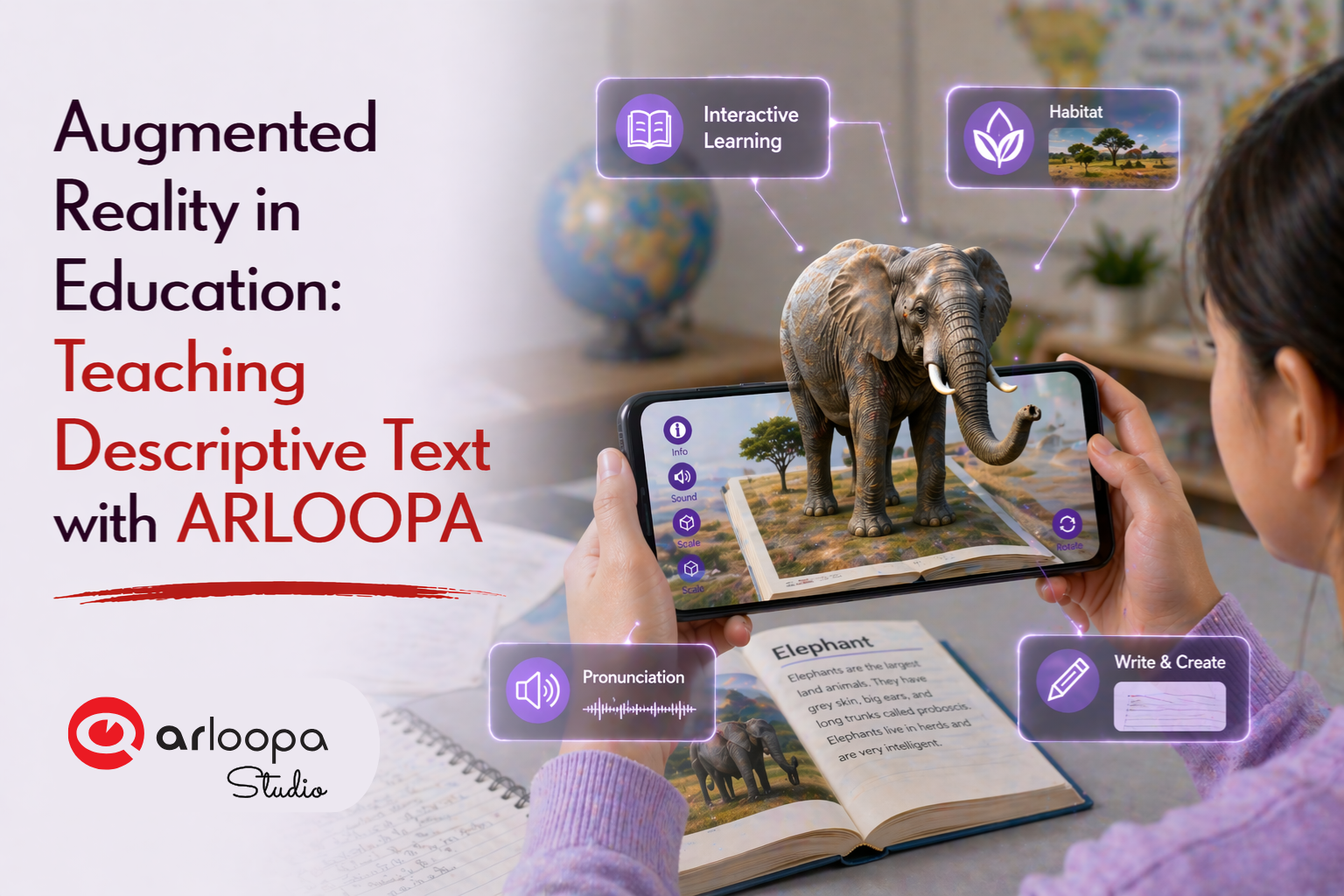
In today’s digital classrooms, traditional teaching methods are no longer enough to fully engage students - especially when it comes to language learning. Descriptive text, which relies heavily on imagination, sensory detail, and visualization, can be particularly challenging for students to grasp through textbooks alone. This is where augmented reality (AR) steps in as a transformative tool.
With platforms like ARLOOPA, educators can turn abstract descriptions into immersive, interactive experiences that bring language to life.
Why Descriptive Text is Hard to Teach
Descriptive writing requires students to:
- Visualize scenes, objects, or people
- Use sensory language (sight, sound, smell, touch, taste)
- Build emotional and contextual depth
However, many students struggle because they:
- Lack real-world exposure to the subject
- Have difficulty imagining details
- Feel disconnected from static learning materials
This often leads to generic, uninspired writing.
How Augmented Reality Changes the Game
Augmented reality overlays digital content - 3D models, animations, sounds - onto the real world. Instead of asking students to imagine a rainforest, a historical monument, or a character, AR allows them to experience it directly.
Key Benefits of AR in Teaching Descriptive Text
1. Enhances Visualization
Students can see 3D objects, environments, or characters in front of them, making it easier to describe details accurately.
2. Stimulates the Senses
AR experiences can include sound and motion, helping students incorporate richer sensory language into their writing.
3. Boosts Engagement
Interactive content naturally captures attention, increasing motivation and participation.
4. Encourages Creativity
Students move beyond textbook examples and start crafting unique, vivid descriptions based on immersive experiences.
Teaching Descriptive Text with ARLOOPA
ARLOOPA provides an intuitive platform for educators to create and deploy AR experiences without advanced technical skills.
Practical Classroom Applications
1. Object-Based Descriptions
Teachers can place 3D objects (e.g., animals, artifacts, or everyday items) in the classroom using ARLOOPA.
Students observe the object from different angles and write detailed descriptions.
2. Virtual Environments
Create immersive scenes like forests, cities, or historical settings.
Students “step into” the environment and describe what they see, hear, and feel.
3. Character Exploration
Bring fictional or historical characters to life in AR.
Students describe appearance, personality, and emotions based on visual cues.
4. Interactive Story Prompts
Use AR scenes as story starters where students write descriptive paragraphs or full narratives inspired by what they experience.
Example Lesson Plan
Objective: Improve students’ ability to write descriptive paragraphs
Activity:
- Launch an ARLOOPA experience (e.g., a jungle scene)
- Ask students to observe carefully for 2–3 minutes
- Guide them with prompts:
- What do you see?
- What sounds can you imagine?
- What textures or smells might exist?
- Students write a descriptive paragraph
- Share and discuss results as a class
Outcome:
Students produce more vivid, detailed, and engaging descriptions compared to traditional methods.
Why ARLOOPA Stands Out
Unlike many AR tools, ARLOOPA is designed with accessibility and creativity in mind:
- Easy-to-use interface for teachers
- Supports rich 3D content and animations
- Works across devices, making it classroom-friendly
- Ideal for both in-person and hybrid learning environments
The Future of Language Learning
As education continues to evolve, AR is becoming a powerful bridge between imagination and reality. For subjects like descriptive writing, where visualization is key, tools like ARLOOPA are not just enhancements - they are game changers.
By integrating augmented reality into the classroom, educators can transform passive learning into active exploration, helping students develop stronger writing skills while enjoying the process.
Ready to bring your lessons to life?
Start using ARLOOPA to turn descriptive text into an immersive learning experience your students will never forget.


See more articles



Solutions