




 Bringing History Back to Life with AR: A New Era for Heritage Sites
Bringing History Back to Life with AR: A New Era for Heritage Sites
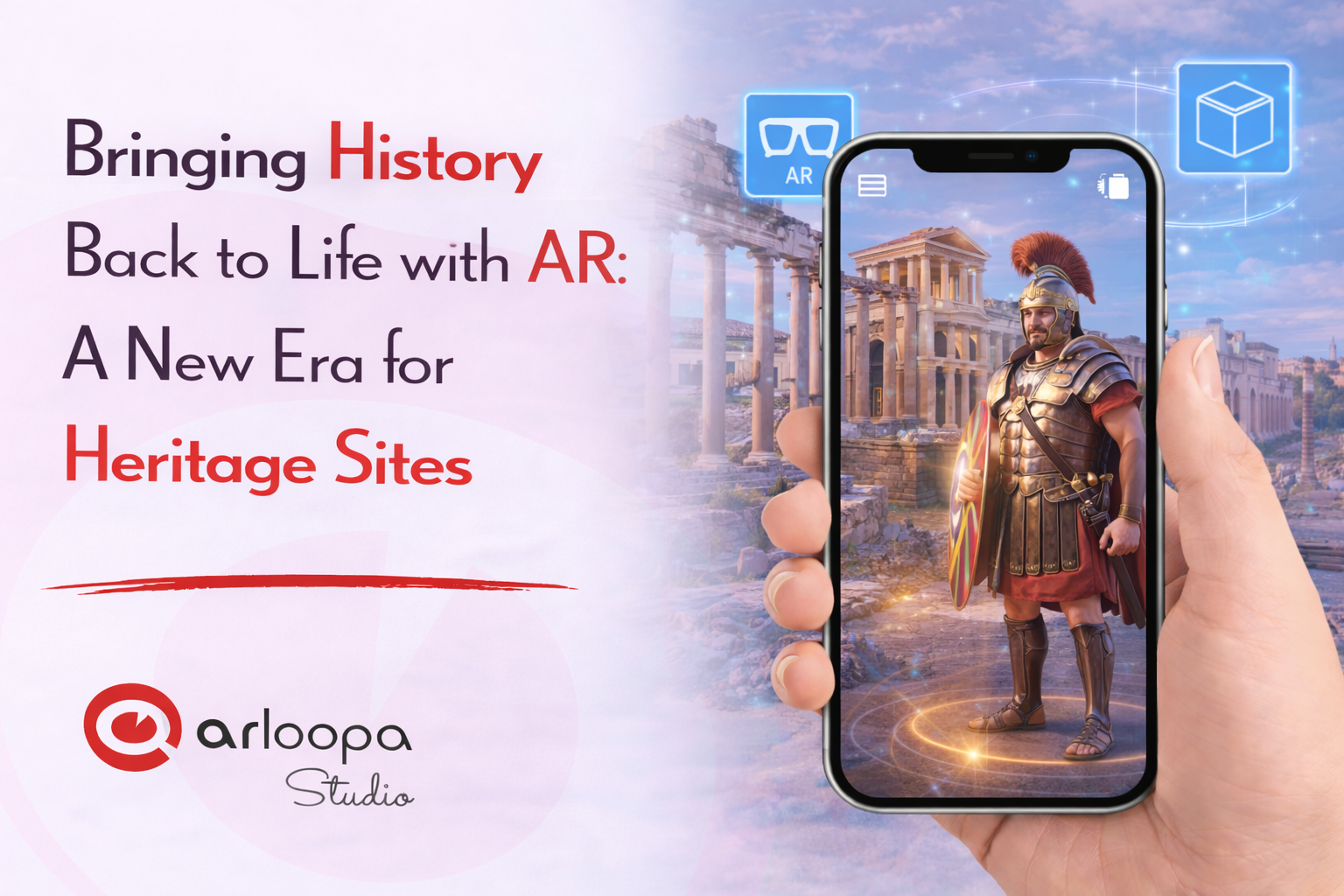
History is all around us - but too often, it’s invisible.
Ancient ruins, damaged monuments, and historic landmarks can be difficult to fully understand just by looking at what remains. That’s where augmented reality (AR) is changing everything. By layering digital content onto physical spaces, AR is unlocking stories that were once lost in time.
With tools like ARLOOPA and its powerful creation platform, heritage sites can now transform into immersive, living experiences.
Seeing the Past as It Once Was

Imagine standing in front of ancient ruins - and with a simple scan, seeing the structure fully restored in its original form.
AR makes it possible to:
- Reconstruct destroyed or incomplete architecture
- Overlay past and present views in real time
- Visualize entire cities that no longer exist
Instead of relying on imagination, visitors can experience history visually and spatially, right where it happened.
Storytelling That Goes Beyond Text Panels
Traditional plaques and audio guides often struggle to capture attention - especially for younger audiences.
AR changes storytelling by introducing:
- Animated historical characters
- Reenactments of key events
- Interactive narratives triggered by location
Visitors don’t just read about history - they step inside it.
Deeper Learning Through Immersion

Immersive experiences are proven to improve understanding and memory. AR enhances learning by combining:
- Visual context
- Spatial awareness
- Interactive engagement
This is especially valuable for:
- Museums and exhibitions
- Educational tours
- Cultural institutions
AR turns passive visits into meaningful learning experiences.
Preserving Culture in a Digital World
Not all heritage can be physically preserved - but it can be digitally protected.
With AR, institutions can:
- Archive historical sites in 3D
- Recreate lost artifacts
- Share cultural heritage globally
This ensures that even if physical structures fade, their stories remain accessible for future generations.
Creating AR Experiences with ARLOOPA Studio
One of the most exciting aspects of this transformation is that you don’t need a complex development team to build AR experiences.
With ARLOOPA and ARLOOPA Studio, heritage organizations, tourism boards, and even individual creators can design their own immersive projects.
What You Can Create:
- 3D Reconstructions
Rebuild ancient temples, castles, or entire historical environments and place them directly on-site. - Interactive Story Points
Add clickable hotspots that reveal facts, videos, or animations when users explore a location. - Character-Based Experiences
Bring historical figures to life as animated guides who tell stories and interact with visitors. - Before & After Visualizations
Show how a site looked in different time periods with layered AR scenes. - AR Tours Without Guides
Create self-guided experiences that visitors can access anytime via their smartphones.
Why It Matters:
- No coding required
- Fast deployment for real-world locations
- Scalable for cities, museums, and cultural sites
- Engaging for modern, digital-first audiences
This opens the door for any heritage site to become interactive, regardless of size or budget.
The Future is Layered with Stories
We are entering a new era where the past is no longer static or distant. Through augmented reality, history becomes:
- Visible
- Interactive
- Personal
Heritage sites are more than just places - they are stories waiting to be told.
Augmented reality gives us the tools to tell those stories in ways that are vivid, emotional, and unforgettable. And as technology continues to evolve, the line between past and present will only become more seamless.
The future of heritage isn’t just preserved - it’s experienced.


See more articles



Solutions