




 WebAR vs App-Based AR: Which Solution Is Right for Your Business?
WebAR vs App-Based AR: Which Solution Is Right for Your Business?
Augmented reality (AR) has become a powerful tool for businesses looking to create immersive customer experiences. From interactive product visualization to virtual try-ons and engaging marketing campaigns, AR is transforming how brands connect with their audiences.
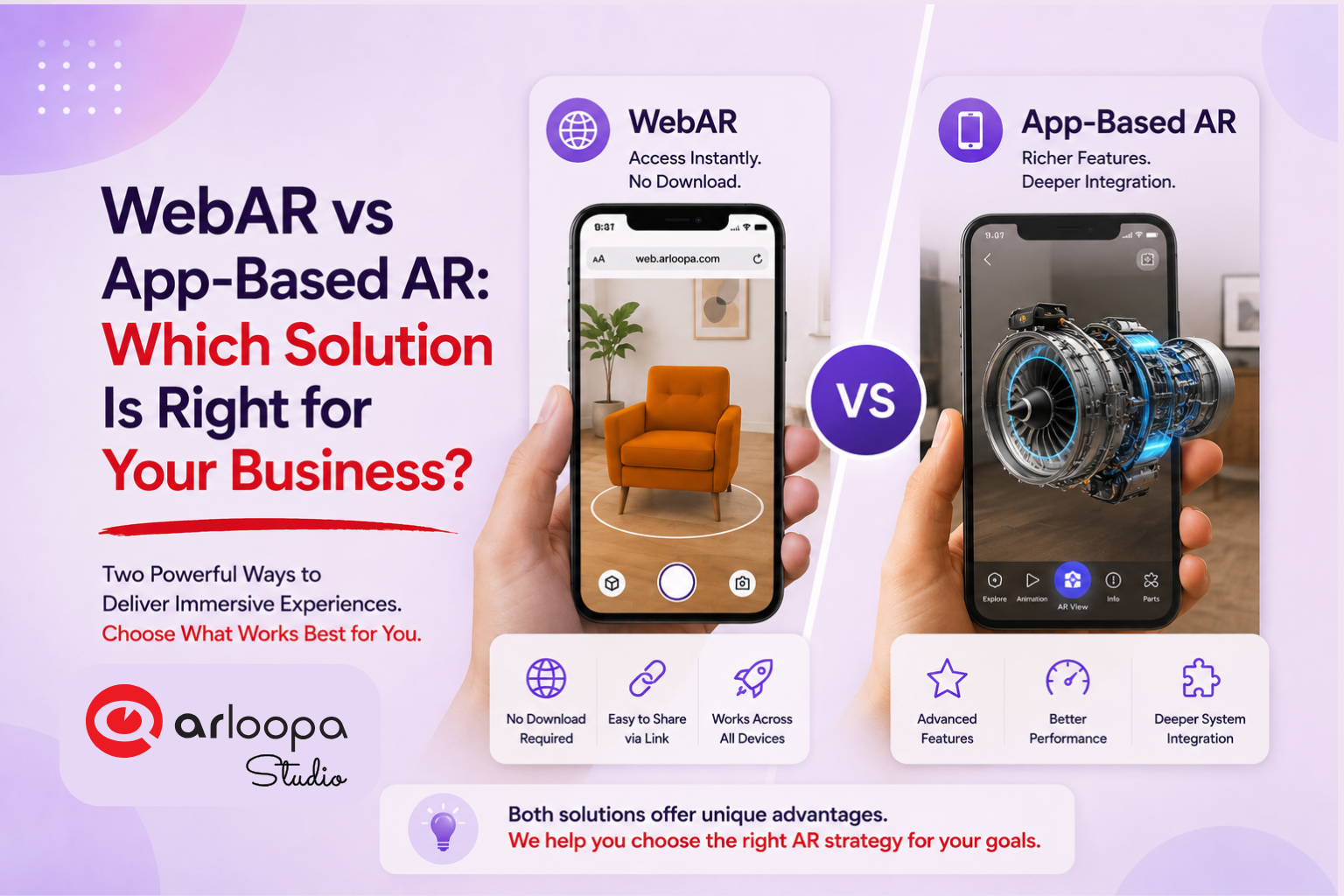
When planning an AR project, one of the first decisions is choosing between WebAR and app-based AR. Both technologies offer unique advantages, and the right choice depends on your goals, audience, and technical requirements.
In this guide, we compare WebAR and app-based AR to help you determine which solution best fits your business needs.
What Is WebAR?
WebAR is augmented reality that runs directly in a mobile web browser such as Google Chrome or Apple Safari. Users can access the experience by scanning a QR code or clicking a link - no app download required.
With WebAR, customers can instantly launch AR experiences from websites, social media campaigns, product packaging, email newsletters, and printed materials.
Key Benefits of WebAR
- No app installation required
- Instant access through a browser
- Lower friction and higher participation rates
- Easy to share using links and QR codes
- Ideal for marketing campaigns and ecommerce
What Is App-Based AR?
App-based AR is built into a dedicated mobile application, either as a standalone AR app or as a feature within an existing branded app.
These experiences can leverage advanced device capabilities and offer deeper customization, user accounts, and long-term engagement.
Key Benefits of App-Based AR
- More advanced graphics and interactions
- Better performance for complex experiences
- Offline functionality
- User personalization and saved content
- Integration with loyalty programs and analytics
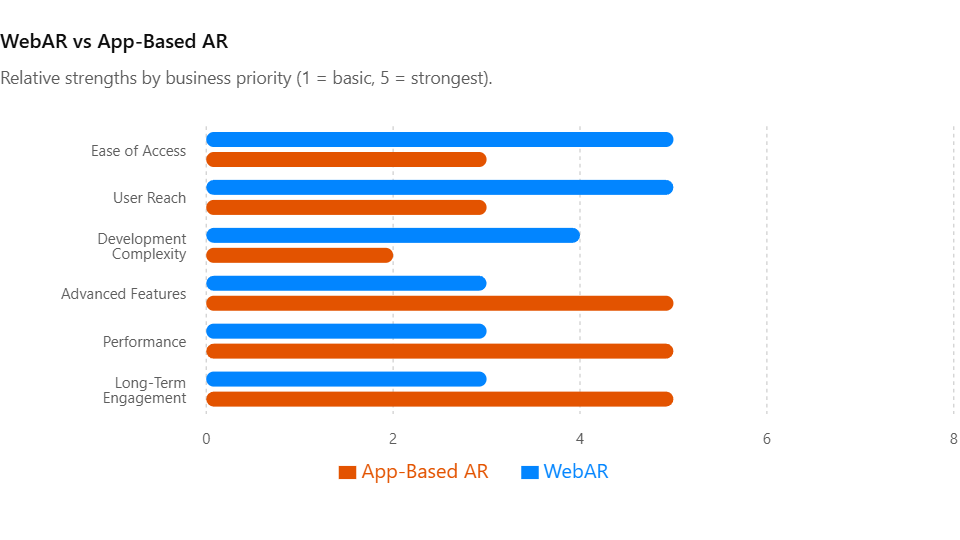
WebAR vs App-Based AR at a Glance
When to Choose WebAR
WebAR is ideal when your primary goal is to maximize reach and make the experience accessible to as many users as possible.
Best Use Cases for WebAR
- Product visualization on ecommerce websites
- Interactive packaging
- AR business cards and brochures
- Event activations
- Digital advertising campaigns
- Educational content
Why Businesses Choose WebAR
Because users can launch the experience instantly, WebAR significantly reduces friction. This makes it especially effective for campaigns focused on awareness, engagement, and lead generation.
When to Choose App-Based AR
App-based AR is the better choice when you need richer functionality and ongoing customer engagement.
Best Use Cases for App-Based AR
- Virtual try-on with saved preferences
- Gaming and entertainment applications
- Employee training tools
- Enterprise solutions
- Loyalty and rewards programs
Why Businesses Choose App-Based AR
A dedicated app allows brands to create highly customized experiences, integrate user accounts, and collect deeper behavioral insights over time.
Cost Considerations
In many cases, WebAR is more cost-effective because it eliminates app store deployment and reduces barriers to adoption.
App-based AR can require greater investment, especially if developing a new mobile application, but it offers broader capabilities and stronger retention opportunities.
The best option depends on whether your priority is immediate accessibility or advanced functionality.
How ARLOOPA Studio Can Help
ARLOOPA Studio develops both WebAR and app-based AR solutions tailored to business objectives across industries such as retail, real estate, education, and events.
Services include:
- WebAR product visualization
- Virtual try-on experiences
- Interactive packaging
- Custom mobile AR applications
- 3D modeling and optimization
- Analytics integration
Whether you need a browser-based campaign or a feature-rich mobile application, ARLOOPA Studio can help you build the right augmented reality solution.
Ready to Launch Your AR Experience?
Whether you are exploring WebAR for a marketing campaign or building a custom AR application, ARLOOPA Studio can help you turn your ideas into immersive digital experiences.
Contact the team to discover which AR solution is best for your business.


See more articles



Solutions