
 Building Interactive Business Cards with AR: Make Every First Impression Unforgettable
Building Interactive Business Cards with AR: Make Every First Impression Unforgettable
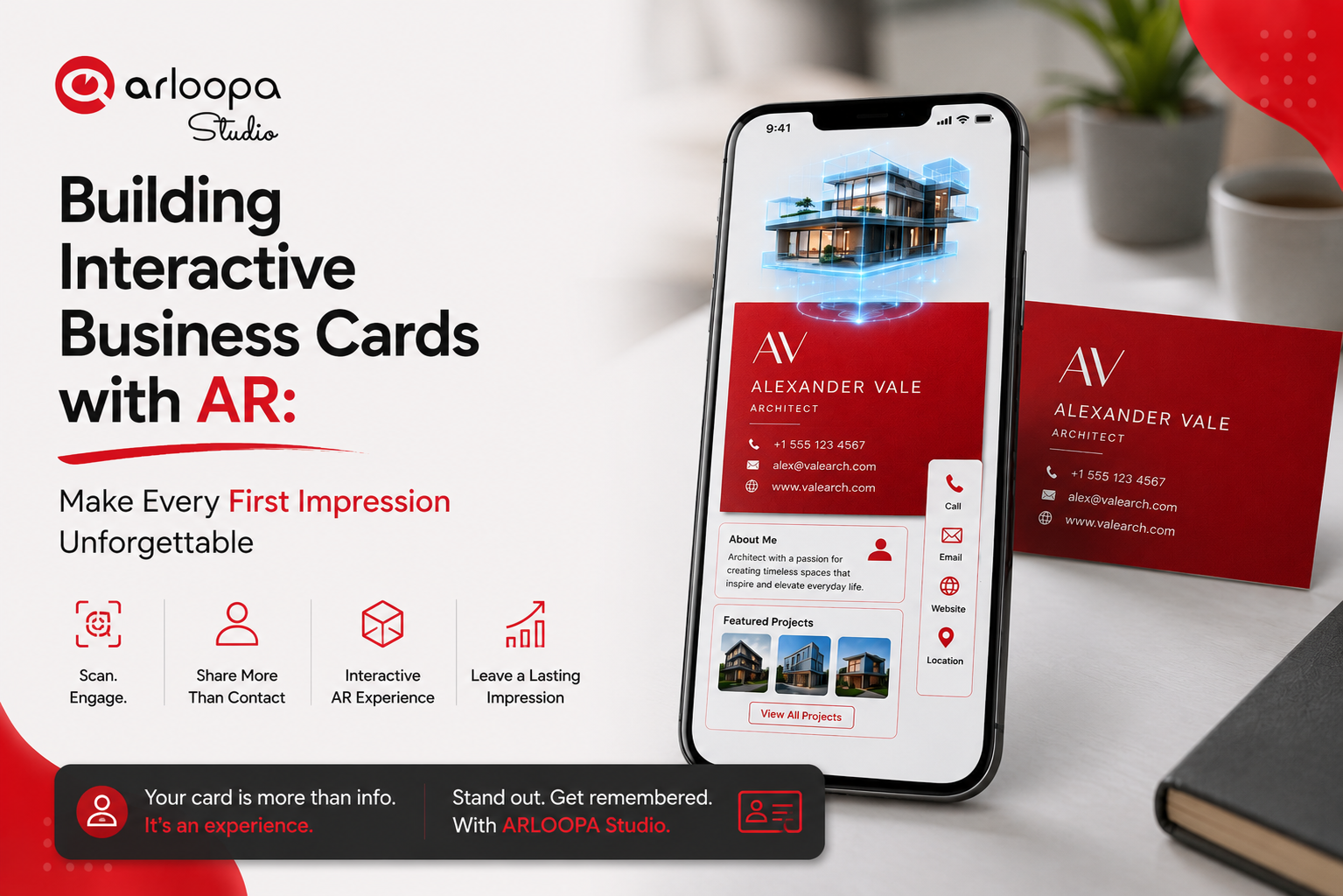
Business cards have been a networking essential for decades. Despite the rise of digital communication, they remain one of the easiest ways to exchange contact information at conferences, meetings, trade shows, and networking events.
But traditional business cards have one major limitation - they're static.
Once someone receives your card, all they have is a name, job title, logo, and contact details. They can't immediately see your work, watch your introduction, browse your portfolio, or interact with your brand.
Augmented Reality (AR) changes that.
With an interactive AR business card, a simple printed card becomes a gateway to videos, 3D content, social media profiles, websites, portfolios, booking forms, and much more. Instead of handing someone a piece of paper, you're giving them an immersive digital experience that leaves a lasting impression.
What Is an Interactive AR Business Card?
An interactive business card uses Image Tracking or WebAR to transform a printed card into a digital experience.
When someone scans the card using their smartphone, additional content appears on the screen, including:
- Introduction videos
- Company presentations
- Portfolio galleries
- 3D product demonstrations
- Social media links
- Website shortcuts
- Contact buttons
- Appointment booking
- Downloadable brochures
- Interactive buttons and forms
The physical business card becomes the starting point for a richer conversation.
Why Traditional Business Cards Are No Longer Enough
A standard business card typically includes:
- Name
- Job title
- Company
- Phone number
- Email address
- Website
While useful, this information doesn't communicate your personality, expertise, or the value you offer.
In today's competitive business environment, people remember experiences more than printed information.
An AR business card helps you stand out by turning a simple introduction into an engaging interaction.
Benefits of Interactive AR Business Cards
1. Make a Strong First Impression
Networking events are filled with similar-looking business cards.
An AR business card immediately captures attention by offering something unexpected and memorable.
Instead of simply reading your name, people can explore your work, watch your introduction, or interact with your products within seconds.
2. Showcase Your Portfolio
Creative professionals often struggle to demonstrate their work during brief conversations.
With AR, you can instantly display:
- Design projects
- Architecture concepts
- Photography
- Artwork
- Product catalogs
- Videos
- 3D models
Your business card becomes a portable portfolio.
3. Share More Than Contact Information
There's only so much space on a printed card.
AR removes those limitations.
You can include:
- Company story
- Service descriptions
- Testimonials
- Promotional videos
- Downloadable brochures
- Price lists
- Case studies
- Interactive presentations
Without making the physical card cluttered.
4. Increase Website and Social Media Visits
Instead of expecting people to type your website manually, AR provides direct access.
Users can tap interactive buttons to:
- Visit your website
- Follow your social media
- Connect on LinkedIn
- Watch YouTube videos
- Book a meeting
- Send an email
- Save contact information
Reducing friction increases engagement.
5. Keep Information Up to Date
Printed cards become outdated when contact details change.
With AR, the digital content connected to your card can be updated without reprinting every piece of information.
Your physical card remains the same while the experience evolves.
Who Can Benefit from AR Business Cards?
Sales Professionals
Present products, company information, and customer success stories instantly during meetings.
Real Estate Agents
Show property portfolios, virtual tours, neighborhood information, and contact options directly from a business card.
Architects and Designers
Display 3D projects, renderings, and completed work without carrying printed portfolios.
Marketing Agencies
Introduce services through videos, interactive presentations, and case studies.
Photographers
Let potential clients browse galleries or watch highlight reels immediately after receiving a card.
Event Speakers
Share presentation slides, biographies, downloadable resources, and social media profiles with attendees.
Entrepreneurs and Startups
Tell your company's story, demonstrate products, and encourage investors or customers to learn more.
What Can an AR Business Card Include?
The possibilities extend far beyond contact information.
An interactive business card can feature:
- Welcome videos
- Animated company logos
- 3D product models
- Product catalogs
- Portfolio galleries
- Customer testimonials
- Interactive buttons
- Appointment scheduling
- Maps and office directions
- Contact forms
- Downloadable PDFs
- QR codes
- Social media links
- Promotional offers
Everything is accessible from one scan.
Building Interactive Business Cards with ARLOOPA Studio
Creating an AR business card no longer requires coding or a dedicated development team.
With ARLOOPA Studio, professionals and businesses can build interactive business cards using an intuitive no-code editor.
You can:
- Use Image Tracking to transform a printed business card into an interactive AR experience.
- Add videos, portfolio images, PDFs, presentations, audio, and interactive buttons that appear when the card is scanned.
- Showcase 3D product models or branded animations to create a memorable introduction.
- Publish the experience through WebAR, allowing recipients to access the content directly from a browser without downloading an app.
- Update your digital content at any time while continuing to use the same printed business cards.
Whether you're networking at conferences, attending trade shows, meeting clients, or introducing your business, ARLOOPA Studio helps turn every business card into a powerful marketing tool.


See more articles



Solutions