




 Construction Progress Visualization with AR and VR: Transforming Project Planning, Monitoring, and Collaboration
Construction Progress Visualization with AR and VR: Transforming Project Planning, Monitoring, and Collaboration
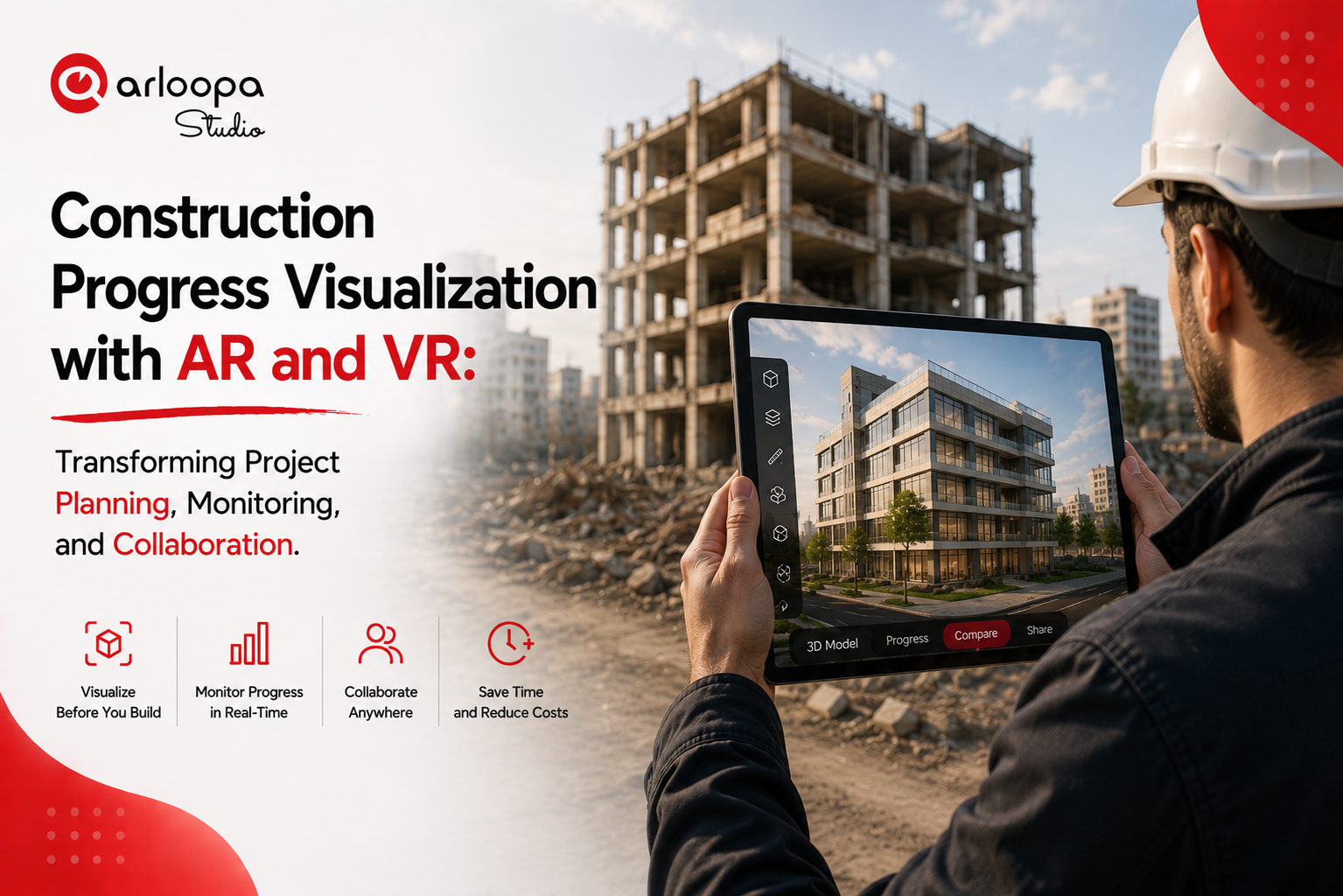
Construction projects involve thousands of moving parts - from architectural planning and stakeholder communication to on-site coordination and progress monitoring. Keeping everyone aligned throughout the project lifecycle is one of the industry's biggest challenges.
Traditionally, construction teams have relied on blueprints, 2D drawings, photographs, and written reports to communicate progress. While these methods remain important, they don't always provide a clear picture of how a project is evolving.
This is where Augmented Reality (AR) and Virtual Reality (VR) are transforming the construction industry.
By visualizing projects in immersive 3D environments, AR and VR help architects, engineers, contractors, clients, and project managers better understand construction progress, identify potential issues earlier, and make faster, more informed decisions.
What Is Construction Progress Visualization?
Construction progress visualization is the process of presenting the current status of a building project using digital models, real-world overlays, and immersive virtual environments.
Instead of interpreting complex drawings or comparing photos taken at different stages, stakeholders can see exactly how a project is progressing.
Using AR and VR, teams can compare planned designs with actual construction, monitor milestones, communicate updates more effectively, and collaborate regardless of location.
Understanding AR and VR in Construction
Although AR and VR are often mentioned together, they serve different purposes.
Augmented Reality (AR)
AR overlays digital building models, annotations, and project data onto the real construction site using a smartphone, tablet, or AR headset.
Project teams can stand on-site and see:
- Planned structures aligned with real-world surroundings
- Construction stages
- Utility systems
- Equipment placement
- Safety information
- Project updates
AR enhances the physical environment with digital information.
Virtual Reality (VR)
VR creates a fully immersive digital environment that users can explore before, during, or after construction.
Using a VR headset, stakeholders can:
- Walk through unfinished buildings
- Explore interior spaces
- Review design decisions
- Evaluate construction progress remotely
- Conduct virtual client presentations
VR allows teams to experience the project before it is physically completed.
Benefits of AR and VR for Construction Progress Visualization
1. Compare Planned vs. Actual Construction
One of the biggest advantages of AR is the ability to overlay BIM or 3D models directly onto the construction site.
Teams can instantly compare:
- Planned layouts
- Structural elements
- Utilities
- Mechanical systems
- Completed work
Differences become visible immediately, allowing issues to be addressed before they become costly problems.
2. Improve Communication
Construction projects involve many stakeholders:
- Architects
- Engineers
- Contractors
- Clients
- Investors
- Inspectors
Not everyone can easily interpret technical drawings.
AR and VR present project information in a visual format that everyone can understand, reducing misunderstandings and improving collaboration.
3. Detect Problems Earlier
Finding errors after construction is expensive.
By visualizing progress in AR or VR, teams can identify:
- Incorrect installations
- Design conflicts
- Missing components
- Space limitations
- Accessibility concerns
Early detection reduces delays and minimizes rework.
4. Enhance Client Presentations
Many clients struggle to visualize how a completed building will look from architectural plans alone.
VR allows them to walk through future spaces before construction is complete, while AR lets them see how the finished building will fit into its actual surroundings.
This creates greater confidence and supports faster decision-making.
5. Improve Remote Collaboration
Construction teams often work across multiple locations.
VR enables architects, engineers, consultants, and clients to review projects together without traveling to the construction site.
This reduces travel costs while speeding up approvals and design reviews.
6. Increase Site Safety
Safety is a top priority on every construction project.
AR can display:
- Hazard zones
- Emergency routes
- Equipment locations
- Safety procedures
- Temporary structures
Workers gain better situational awareness while remaining focused on their surroundings.
Real-World Applications
Building Progress Monitoring
Project managers can compare current construction with BIM models to ensure work is progressing according to schedule.
Architectural Design Reviews
Architects can evaluate design changes before they are built, helping reduce costly modifications later in the project.
Client Walkthroughs
Developers can present unfinished properties through VR, allowing buyers and investors to experience spaces before construction is complete.
Infrastructure Projects
Roads, bridges, tunnels, airports, and public facilities can all be visualized using AR to improve coordination among engineering teams.
Interior Design
Designers can place furniture, lighting, finishes, and decorative elements into completed or unfinished spaces using AR before installation begins.


See more articles



Solutions