


 How Augmented Reality Can Bring Printed Media to Life
How Augmented Reality Can Bring Printed Media to Life
Printed media has long been an important part of marketing and communication. From brochures and posters to magazines and product packaging, printed materials help businesses share information and promote their brands.
However, traditional print content is static. Once printed, it cannot change or interact with the audience. This is where Augmented Reality (AR) offers a powerful solution.
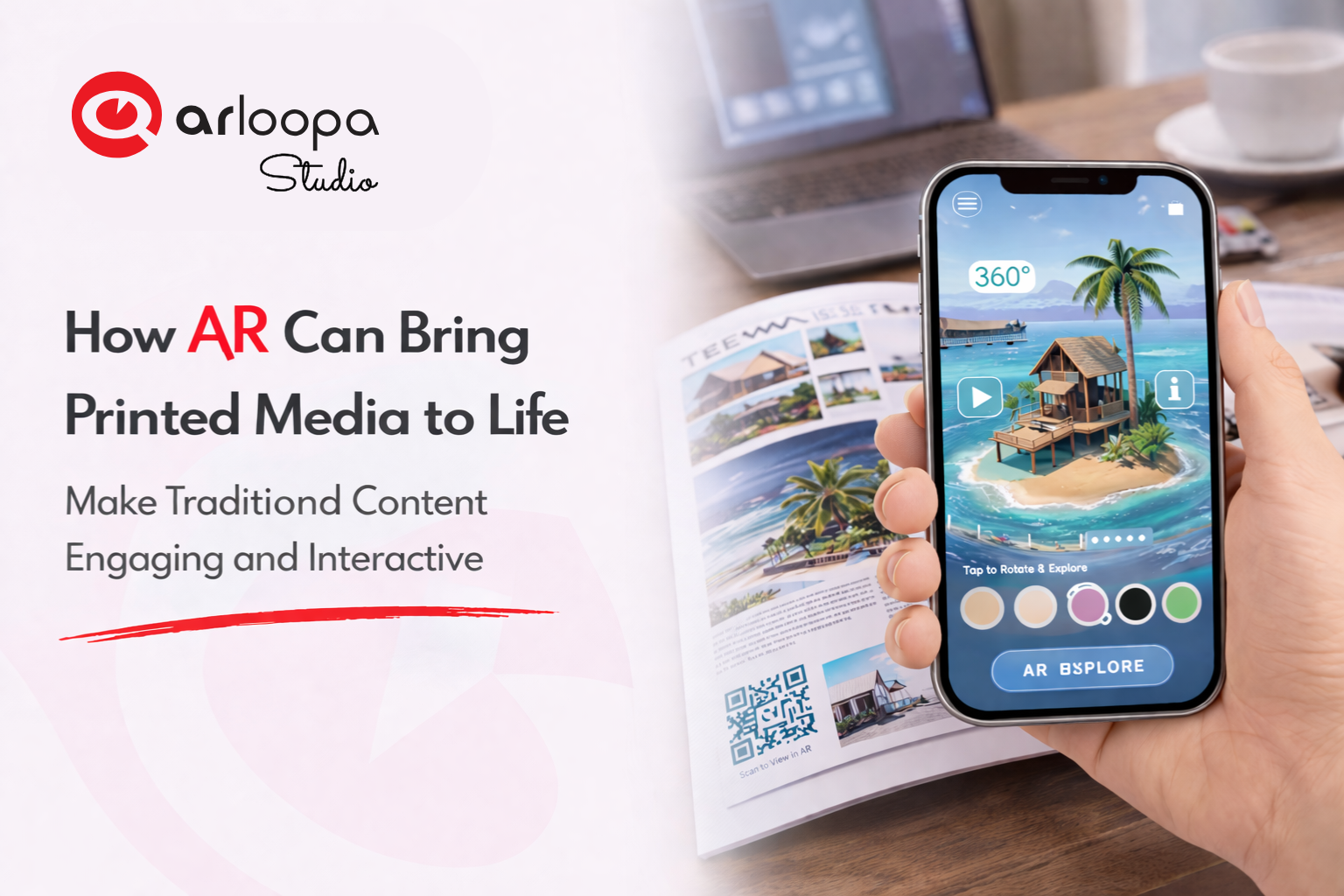
By combining printed materials with digital content, Augmented Reality can transform static images into interactive experiences. With just a smartphone, users can scan printed materials and instantly unlock videos, 3D models, animations, or interactive content.
In this article, we’ll explore how AR brings printed media to life and how businesses can use it to create engaging marketing experiences.
What Is Augmented Reality in Printed Media?
Augmented Reality for printed media allows digital content to appear when a user scans a printed image or object using their smartphone camera.
The printed image acts as a trigger (or marker) that activates the AR experience.
When the image is recognized, digital elements such as:
- animations
- videos
- interactive buttons
- 3D models
- sound effects
can appear on top of the printed material.
This creates the impression that digital content exists within the physical world.
1. Interactive Posters and Advertisements
Posters and billboards are common forms of advertising, but they often compete with many other visual distractions.
With Augmented Reality, posters can become interactive marketing experiences.
When scanned with a smartphone, an AR poster can display:
- animated characters
- promotional videos
- interactive product demonstrations
- links to websites or online stores
This transforms a simple poster into an engaging multimedia experience.
2. AR Business Cards
Traditional business cards are useful but limited in the amount of information they can display.
Augmented Reality allows businesses to create interactive AR business cards that provide much richer experiences.
When scanned, a business card could reveal:
- a personal introduction video
- a 3D logo animation
- portfolio examples
- clickable contact details
This makes networking more memorable and helps businesses stand out.
3. Interactive Magazines and Newspapers
Augmented Reality is also transforming magazines and printed publications.
Readers can scan magazine pages and unlock additional content such as:
- behind-the-scenes videos
- 3D product models
- interviews or extended content
- interactive advertisements
This allows publishers to combine the tactile experience of print with the richness of digital media.
4. AR Product Packaging
Product packaging is another powerful use case for AR-enhanced printed media.
By scanning packaging with a smartphone, customers can access:
- product tutorials
- interactive brand storytelling
- promotional games
- loyalty rewards or discounts
This creates a deeper connection between the brand and the customer.
5. Educational Printed Materials
Augmented Reality can also enhance educational books, posters, and learning materials.
Students can scan printed images to see:
- animated scientific concepts
- 3D historical reconstructions
- interactive diagrams
- educational videos
This makes learning more engaging and easier to understand.
Benefits of Using AR with Printed Media
Augmented Reality provides several advantages for businesses and publishers using printed materials.
Increased Engagement
Interactive experiences capture attention and encourage users to explore content more deeply.
Extended Content
AR allows printed materials to include unlimited digital content beyond the physical page.
Measurable Interaction
Businesses can track how users interact with AR experiences, gaining insights into customer behavior.
Modern Marketing Innovation
AR-enhanced print materials stand out and create memorable brand impressions.
Real-World Applications of AR Print Campaigns
Many brands are already using augmented reality to enhance printed media, including:
- AR product packaging campaigns
- interactive magazine advertisements
- AR event posters
- educational textbooks with AR content
- tourism brochures with interactive guides
These campaigns demonstrate how AR can bridge the gap between physical print and digital interaction.
Create AR Experiences for Printed Media with ARLOOPA Studio
If you want to transform your printed materials into interactive experiences, ARLOOPA Studio provides powerful tools for creating AR content.
With ARLOOPA Studio, you can easily create:
- AR posters and flyers
- interactive business cards
- AR product packaging experiences
- educational AR materials
- immersive marketing campaigns
The platform allows businesses and creators to build AR experiences without complex programming knowledge.


See more articles



Solutions