




 How Augmented Reality Increases Customer Engagement
How Augmented Reality Increases Customer Engagement
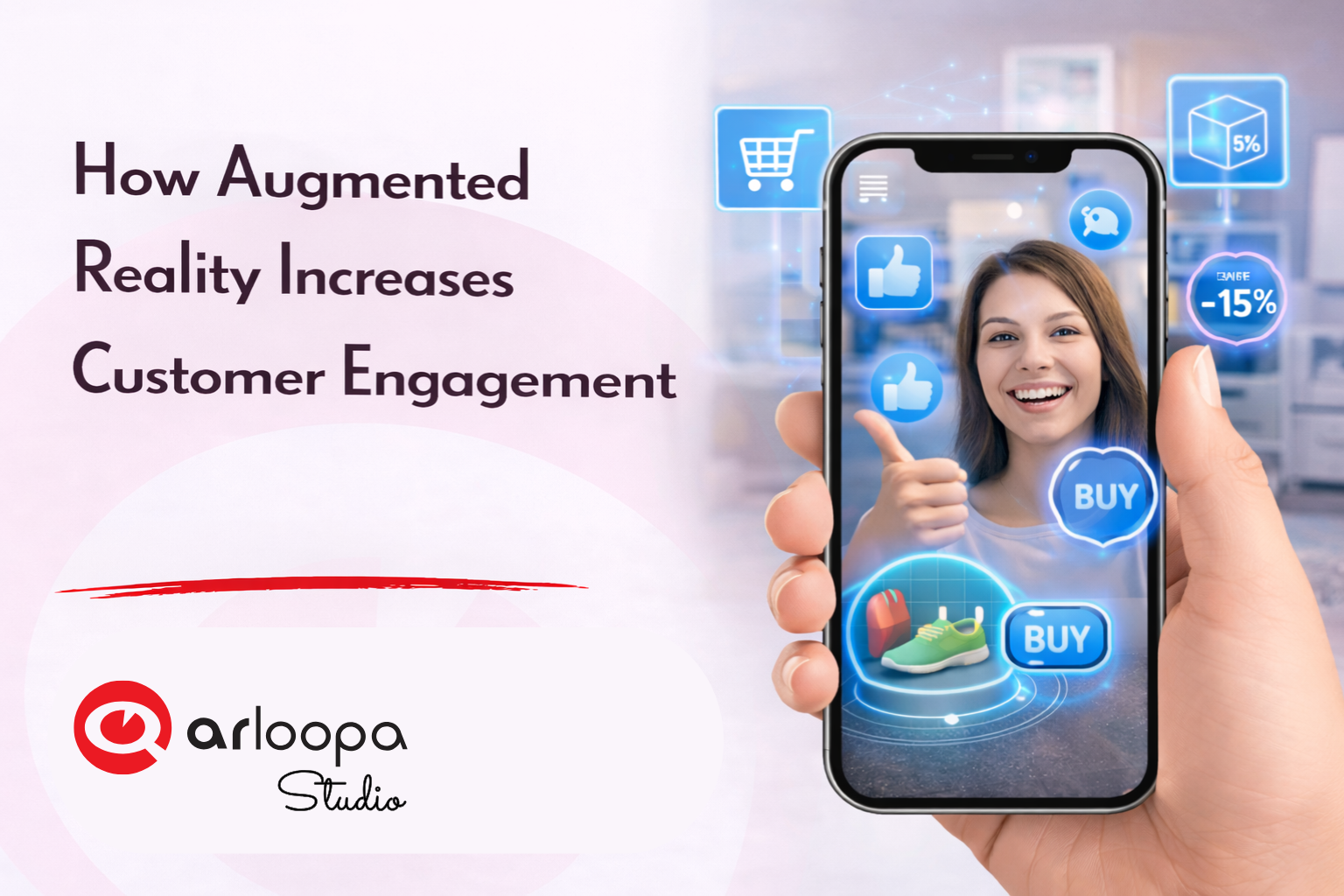
In today’s digital world, capturing and maintaining customer attention has become more challenging than ever. Traditional marketing methods often struggle to stand out in a crowded online environment. This is where Augmented Reality (AR) offers a powerful solution.
By blending digital content with the real world, Augmented Reality creates interactive experiences that actively involve users instead of simply showing them information. This level of interaction helps businesses build stronger connections with their audiences and significantly improve customer engagement.
In this article, we’ll explore how augmented reality increases customer engagement and why businesses are increasingly using AR in marketing and customer experiences.
What Is Customer Engagement?
Customer engagement refers to the level of interaction and emotional connection customers have with a brand.
Highly engaged customers are more likely to:
- interact with brand content
- spend more time exploring products
- share experiences with others
- remain loyal to the brand
Businesses are constantly looking for ways to increase engagement, and Augmented Reality is proving to be one of the most effective tools to achieve this.
1. AR Turns Passive Content into Interactive Experiences
Traditional digital content—such as images, videos, or advertisements—is usually passive. Customers simply view the content without actively participating.
Augmented Reality changes this dynamic by allowing users to interact with digital elements in their physical environment.
For example, customers can:
- place virtual products in their homes
- explore 3D product models
- interact with animated brand characters
- play AR-based games connected to a campaign
This interactive experience keeps users engaged for longer periods of time.
2. AR Creates Memorable Brand Experiences
One of the biggest advantages of AR is its ability to create unique and memorable experiences.
Instead of simply seeing an advertisement, customers can experience a brand through immersive storytelling.
For example, a product package could trigger:
- a 3D animation
- an interactive story
- a mini game
- an educational experience
These types of interactions create stronger emotional connections with the brand.
3. AR Encourages Social Sharing
Engaging experiences are more likely to be shared on social media.
AR campaigns often include:
- interactive photo filters
- fun visual effects
- AR games or challenges
- shareable interactive moments
When users share AR experiences online, businesses benefit from organic marketing and increased visibility.
Social sharing also helps brands reach new audiences without additional advertising costs.
4. AR Improves Product Understanding
Customers are more likely to engage with products when they can explore them in an interactive way.
AR allows users to:
- view products in 3D
- rotate and explore product details
- visualize products in real environments
- interact with digital demonstrations
This deeper understanding helps customers feel more confident about products and increases their willingness to interact with the brand.
5. AR Extends Customer Interaction Time
One important metric for customer engagement is how long users interact with brand content.
Interactive AR experiences typically hold user attention longer than traditional media.
Instead of spending just a few seconds viewing an advertisement, customers might spend several minutes exploring an AR experience.
Longer interaction times mean greater opportunities for businesses to communicate their brand message.
6. AR Creates Personalized Experiences
Augmented Reality experiences can be tailored to specific audiences, locations, or campaigns.
For example, AR experiences can change depending on:
- the user’s location
- the product being scanned
- the time of year
- specific marketing campaigns
This personalization makes the experience more relevant and engaging for each user.
Real-World Applications of AR for Customer Engagement
Businesses across industries are already using AR to increase customer engagement.
Retail
Brands use AR to create virtual try-on experiences and interactive product displays.
Events and Exhibitions
AR adds interactive layers to exhibitions, trade shows, and brand activations.
Marketing Campaigns
Brands launch AR experiences connected to posters, packaging, and advertisements.
Tourism and Culture
AR guides and historical reconstructions create interactive visitor experiences.
Why AR Is Becoming Essential for Modern Marketing
Consumers today expect digital experiences to be interactive, personalized, and engaging.
Augmented Reality meets these expectations by turning everyday environments into interactive storytelling platforms.
As smartphones become more powerful and AR technology becomes more accessible, businesses of all sizes can integrate AR into their marketing strategies.
Companies that adopt AR early can create experiences that stand out from traditional digital marketing approaches.
Create Engaging AR Experiences with ARLOOPA Studio
If your business wants to increase customer engagement through Augmented Reality, ARLOOPA Studio provides powerful tools for creating interactive experiences.
With ARLOOPA Studio, you can build:
- interactive marketing campaigns
- AR product experiences
- immersive brand storytelling
- AR games and treasure hunts
- interactive educational content
All without complex coding.


See more articles



Solutions