


 Language Learning Using AR: How Augmented Reality Makes Learning a New Language More Interactive
Language Learning Using AR: How Augmented Reality Makes Learning a New Language More Interactive
Learning a new language is about more than memorizing vocabulary and grammar rules. To become confident speakers, students need context, interaction, and opportunities to practice what they've learned in meaningful ways.
This is where augmented reality (AR) is making a difference.
By blending digital content with the real world, AR transforms everyday environments into interactive classrooms. Students can scan objects to learn their names, practice conversations with virtual characters, explore cultural landmarks, and interact with lessons that make language learning more engaging and memorable.
Whether you're teaching young learners, university students, or adult professionals, language learning using AR offers exciting opportunities to improve engagement and retention.
Why Traditional Language Learning Has Limitations
Traditional language education often relies on:
- Textbooks
- Flashcards
- Worksheets
- Audio recordings
- Classroom conversations
While these methods remain valuable, they sometimes lack real-world context. Students may memorize words but struggle to remember them when they encounter real-life situations.
Language is best learned through interaction, repetition, and practical application. AR helps bridge the gap between classroom learning and everyday communication by placing vocabulary and conversations into real-world environments.
What Is AR in Language Learning?
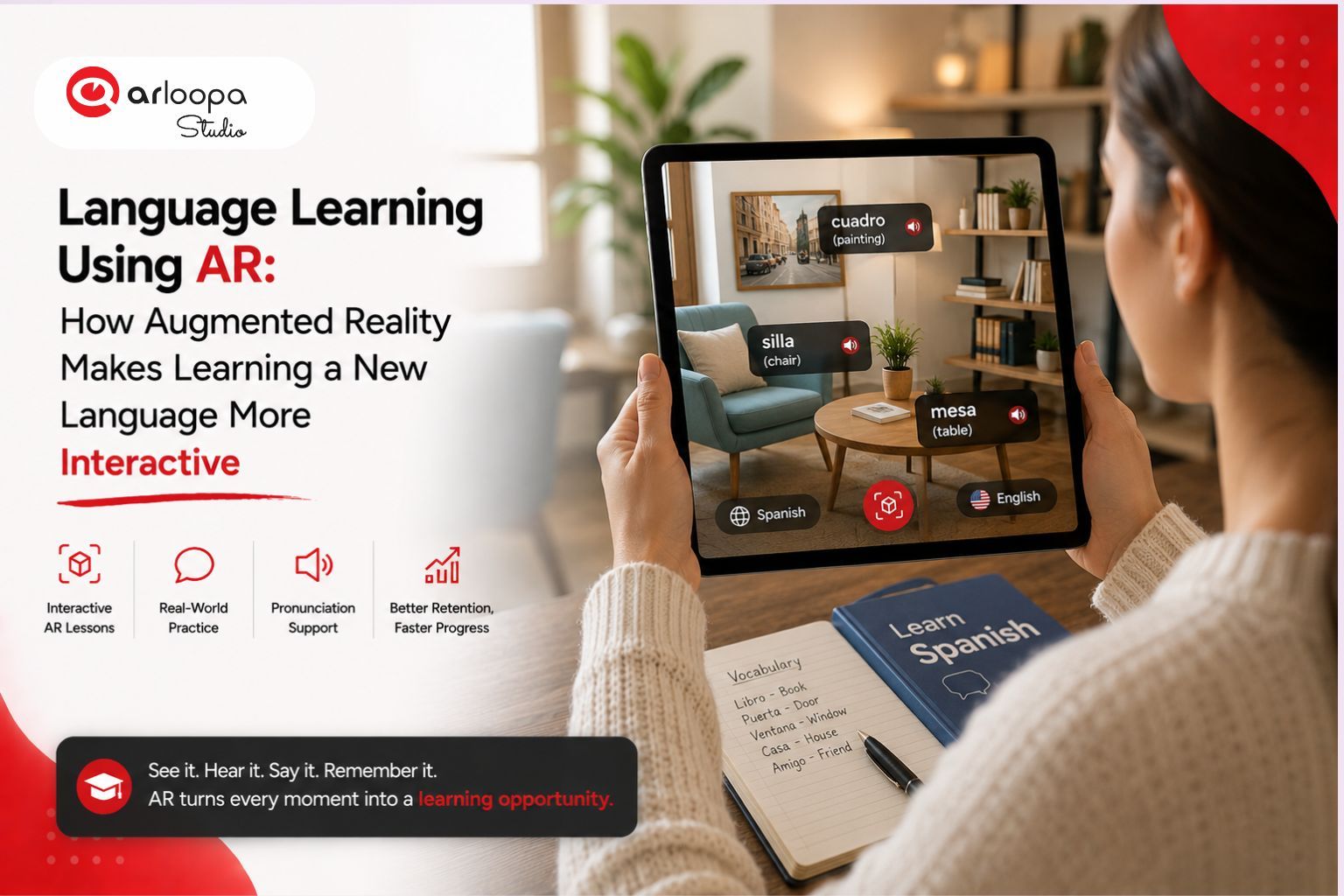
Augmented reality enhances language lessons by overlaying digital content - such as text, audio, images, videos, and 3D models - onto physical objects and locations using a smartphone or tablet.
Instead of simply reading that "apple" means apple, students can point their device at a real apple and instantly see:
- The word in the target language
- Correct pronunciation
- Example sentences
- Audio recordings by native speakers
- Related vocabulary
- Interactive quizzes
Learning becomes visual, contextual, and far more memorable.
Benefits of Language Learning with AR
1. Learn Vocabulary in Context
Context is essential for remembering new words.
Rather than studying isolated vocabulary lists, students associate words with real objects around them.
For example, scanning a classroom might reveal labels for:
- Door
- Window
- Chair
- Table
- Clock
- Whiteboard
Students connect language directly with the physical world, making recall easier during everyday conversations.
2. Improve Pronunciation
Correct pronunciation can be challenging, especially when learners don't regularly hear native speakers.
AR experiences can include:
- Audio pronunciation
- Phonetic guidance
- Native-speaker recordings
- Listening exercises
- Speaking practice prompts
Students can hear and repeat words while interacting with visual content.
3. Increase Student Engagement
Interactive lessons naturally capture students' attention.
Instead of memorizing vocabulary from a worksheet, learners explore their surroundings, complete challenges, and discover new words through AR.
This active participation increases motivation and makes lessons feel more like exploration than study.
4. Support Different Learning Styles
Every student learns differently.
AR combines multiple teaching methods in one experience:
- Visual learning through images and 3D models
- Auditory learning through pronunciation and conversations
- Kinesthetic learning through interaction
- Reading and writing through text and quizzes
This creates a richer learning environment that supports a wide range of learners.
5. Encourage Independent Learning
AR allows students to continue practicing outside the classroom.
They can scan household objects, books, posters, or educational materials to review vocabulary and reinforce lessons at their own pace.
This encourages regular practice - one of the most important factors in language acquisition.
Creative Ways to Use AR for Language Learning
Interactive Vocabulary Cards
Flashcards become interactive when students scan them to reveal:
- 3D objects
- Audio pronunciation
- Example sentences
- Synonyms
- Mini quizzes
Instead of simply reading words, students interact with them.
Label Everyday Objects
Teachers can create AR labels for classroom items.
Students walk around the room identifying objects in the target language while hearing their pronunciation and learning how to use them in sentences.
This transforms the classroom into an immersive language environment.
Storybooks That Come to Life
Children's books become far more engaging when AR adds:
- Animated characters
- Narration by native speakers
- Interactive vocabulary
- Cultural information
- Reading activities
Young learners stay engaged while improving comprehension and pronunciation.
Cultural Exploration
Language learning also involves understanding culture.
AR can bring cultural landmarks, traditions, festivals, and historical sites into the classroom through interactive 3D models, videos, and storytelling.
Students gain a deeper appreciation of the language by exploring the culture behind it.
Conversation Practice
Teachers can create scenarios where students interact with virtual characters in everyday situations such as:
- Ordering food
- Shopping
- Asking for directions
- Visiting a doctor
- Booking a hotel
These realistic simulations help learners build confidence before using the language in real life.
AR Activities for Different Age Groups
Primary School
Young learners enjoy:
- Interactive alphabet games
- Animal vocabulary
- Color recognition
- Object matching
- Storytelling activities
Learning feels like play while building foundational language skills.
Secondary School
Older students benefit from:
- Grammar exercises
- Cultural exploration
- Vocabulary challenges
- Reading comprehension
- Speaking activities
AR encourages active participation and collaboration.
Universities and Adult Learning
Higher education and professional training can use AR for:
- Business communication
- Technical vocabulary
- Industry-specific terminology
- Cultural awareness
- Presentation practice
Immersive activities prepare learners for real-world communication.
Creating Language Lessons with ARLOOPA Studio
Building interactive language lessons doesn't require programming skills.
With ARLOOPA Studio, educators can create immersive educational experiences using an intuitive no-code editor.
Teachers can:
- Use Image Tracking to bring flashcards, textbooks, worksheets, posters, and storybooks to life with interactive vocabulary, pronunciation, and multimedia content.
- Place 3D educational objects into the classroom using Surface Tracking, allowing students to explore language in context.
- Create location-based language activities with Geospatial AR, encouraging learners to practice vocabulary while exploring campuses, museums, or cities.
- Deliver lessons through WebAR, enabling students to access experiences directly from a browser without downloading an app.
- Generate educational 3D models using AI to quickly create engaging learning materials.
By combining images, videos, audio, animations, quizzes, and interactive buttons, ARLOOPA Studio helps educators create memorable language-learning experiences that encourage curiosity and active participation.


See more articles



Solutions