




 Treasure Hunts Using Geospatial AR: Turn Any Location into an Interactive Adventure
Treasure Hunts Using Geospatial AR: Turn Any Location into an Interactive Adventure
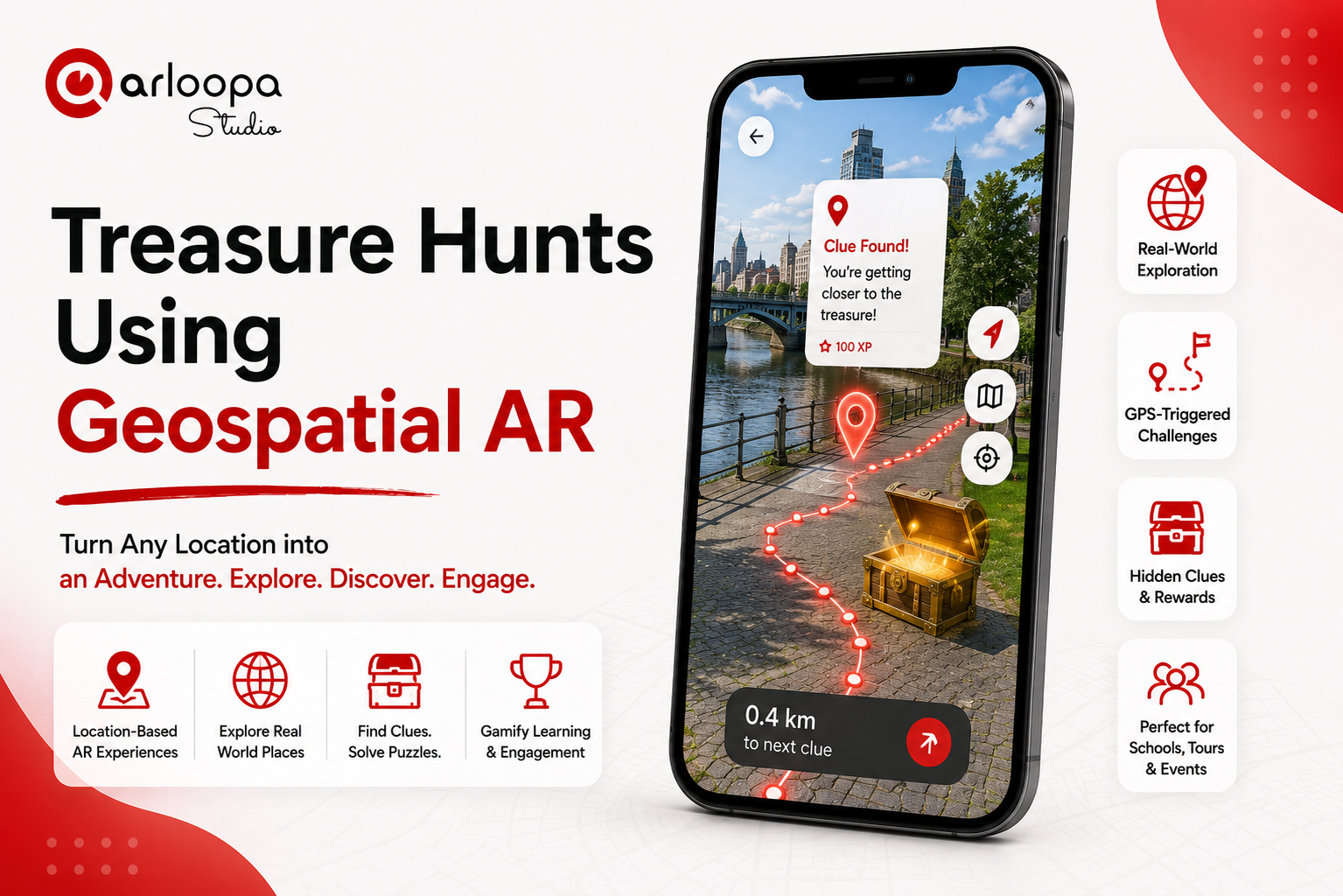
Imagine walking through a city park, a museum district, or a university campus and discovering hidden virtual treasures that only appear when you reach specific locations. Instead of following paper maps or static clues, participants solve puzzles, uncover digital objects, and complete interactive challenges—all through augmented reality.
This is the power of Geospatial AR.
By combining GPS, maps, and augmented reality, Geospatial AR transforms real-world locations into immersive, interactive adventures. Whether you're creating a city-wide game, an educational activity, a marketing campaign, or a tourist experience, treasure hunts using Geospatial AR offer an exciting way to engage people with the spaces around them.
What Is Geospatial AR?
Geospatial AR is a type of augmented reality that anchors digital content to real-world geographic locations using GPS, mapping technologies, and device sensors.
Unlike traditional AR experiences that rely on image markers or flat surfaces, Geospatial AR allows virtual objects to remain fixed at outdoor locations. Users can discover and interact with digital content simply by visiting the right place.
For example, a virtual treasure chest can be placed in a public square, a historical fact can appear beside a monument, or a hidden clue can be revealed only when participants reach a specific point on a trail.
This creates immersive experiences that blend digital storytelling with real-world exploration.
Why Treasure Hunts Are Perfect for Geospatial AR
Treasure hunts naturally encourage movement, curiosity, and problem-solving. Adding Geospatial AR makes them even more engaging by turning physical locations into interactive checkpoints.
Participants don't just read clues—they explore, discover, and interact with digital content as they progress through the experience.
A Geospatial AR treasure hunt can include:
- Virtual treasure chests
- Hidden 3D objects
- Animated characters
- Interactive clues
- Educational information
- Mini-games
- Trivia questions
- Collectible digital rewards
- Leaderboards and achievements
Every stop becomes part of an immersive story.
Benefits of Geospatial AR Treasure Hunts
1. Encourage Real-World Exploration
Unlike traditional mobile games that keep users focused on a screen, Geospatial AR motivates participants to explore real environments.
Treasure hunts can guide visitors through:
- City centers
- Parks
- Museums
- University campuses
- Historical sites
- Nature trails
- Shopping districts
- Festivals
This creates memorable experiences while encouraging physical activity.
2. Increase Engagement
People remember experiences more than information.
By combining exploration with storytelling, puzzles, and interactive AR content, treasure hunts keep participants engaged from beginning to end.
Gamification increases motivation and encourages users to complete the full experience.
3. Create Memorable Learning Experiences
Educational treasure hunts are an excellent way to teach through exploration.
Students can discover:
- Historical landmarks
- Scientific concepts
- Local wildlife
- Cultural heritage
- Architecture
- Geography
Learning becomes active rather than passive, helping students retain information more effectively.
4. Drive Tourism
Tourism organizations increasingly use Geospatial AR to encourage visitors to explore more of a destination.
Instead of following a traditional walking tour, travelers can unlock:
- Historical stories
- Local legends
- Virtual guides
- Hidden landmarks
- Interactive challenges
- Collectible souvenirs
Visitors spend more time exploring and create stronger connections with the destination.
5. Boost Event Participation
Festivals, conferences, and public events can use AR treasure hunts to guide attendees through different locations while encouraging interaction with sponsors, exhibitors, and activities.
Participants remain engaged throughout the event while organizers gather valuable insights into visitor behavior and popular locations.
Industries Using Geospatial AR Treasure Hunts
Tourism
Cities and tourism boards can create interactive walking tours where visitors uncover hidden stories, local history, and cultural landmarks through AR.
Treasure hunts encourage exploration beyond the most popular attractions, helping distribute visitors across more locations.
Education
Schools and universities can turn campuses into interactive learning environments.
Students can complete educational missions by visiting different locations and unlocking digital content tied to their curriculum.
Subjects such as history, geography, biology, and environmental science are especially well suited to location-based learning.
Museums and Cultural Heritage
Outdoor museums, archaeological sites, and historical parks can use Geospatial AR to create self-guided treasure hunts.
Visitors uncover artifacts, historical characters, or stories that appear exactly where important events once took place.
Retail and Shopping Centers
Retailers can organize promotional treasure hunts that encourage customers to visit different stores or departments.
Participants collect virtual rewards, unlock exclusive discounts, or discover limited-time offers throughout the shopping experience.
Corporate Events
Companies can use AR treasure hunts for:
- Team-building activities
- Employee onboarding
- Product launches
- Brand activations
- Conferences
- Networking events
Interactive challenges encourage collaboration while creating memorable experiences.
What Can a Geospatial AR Treasure Hunt Include?
A successful treasure hunt combines location-based exploration with engaging digital content.
Popular elements include:
- GPS-based checkpoints
- Virtual treasure chests
- Interactive 3D models
- Animated characters
- Storytelling sequences
- Educational facts
- Quiz questions
- Audio narration
- Videos
- Digital badges
- Rewards and achievements
By combining different content types, creators can design experiences that are both entertaining and informative.
Creating Treasure Hunts with ARLOOPA Studio
With ARLOOPA Studio, creating a Geospatial AR treasure hunt doesn't require programming knowledge.
Using the no-code visual editor, you can:
- Place AR content at real-world GPS locations using Geospatial AR.
- Add 3D models, animations, videos, audio, and interactive buttons to each checkpoint.
- Build engaging storylines that guide participants from one location to the next.
- Combine Geospatial AR with Image Tracking or Surface Tracking for even richer interactions.
- Publish experiences that users can easily access and enjoy.
Whether you're building a city-wide adventure, an educational campus activity, or a promotional event, ARLOOPA Studio provides the tools to create immersive location-based experiences.
Best Practices for Designing an AR Treasure Hunt
To create an engaging experience:
- Design a compelling story that connects all locations.
- Choose safe, accessible checkpoints.
- Keep clues clear but challenging.
- Balance walking distances to maintain engagement.
- Include a mix of puzzles, exploration, and rewards.
- Test GPS accuracy at every location before publishing.
- Add visual feedback when participants complete a challenge.
A well-designed treasure hunt should encourage exploration while remaining intuitive and enjoyable for participants of all ages.


See more articles



Solutions