


 WebAR for Museums and Education: Bringing Learning to Life
WebAR for Museums and Education: Bringing Learning to Life
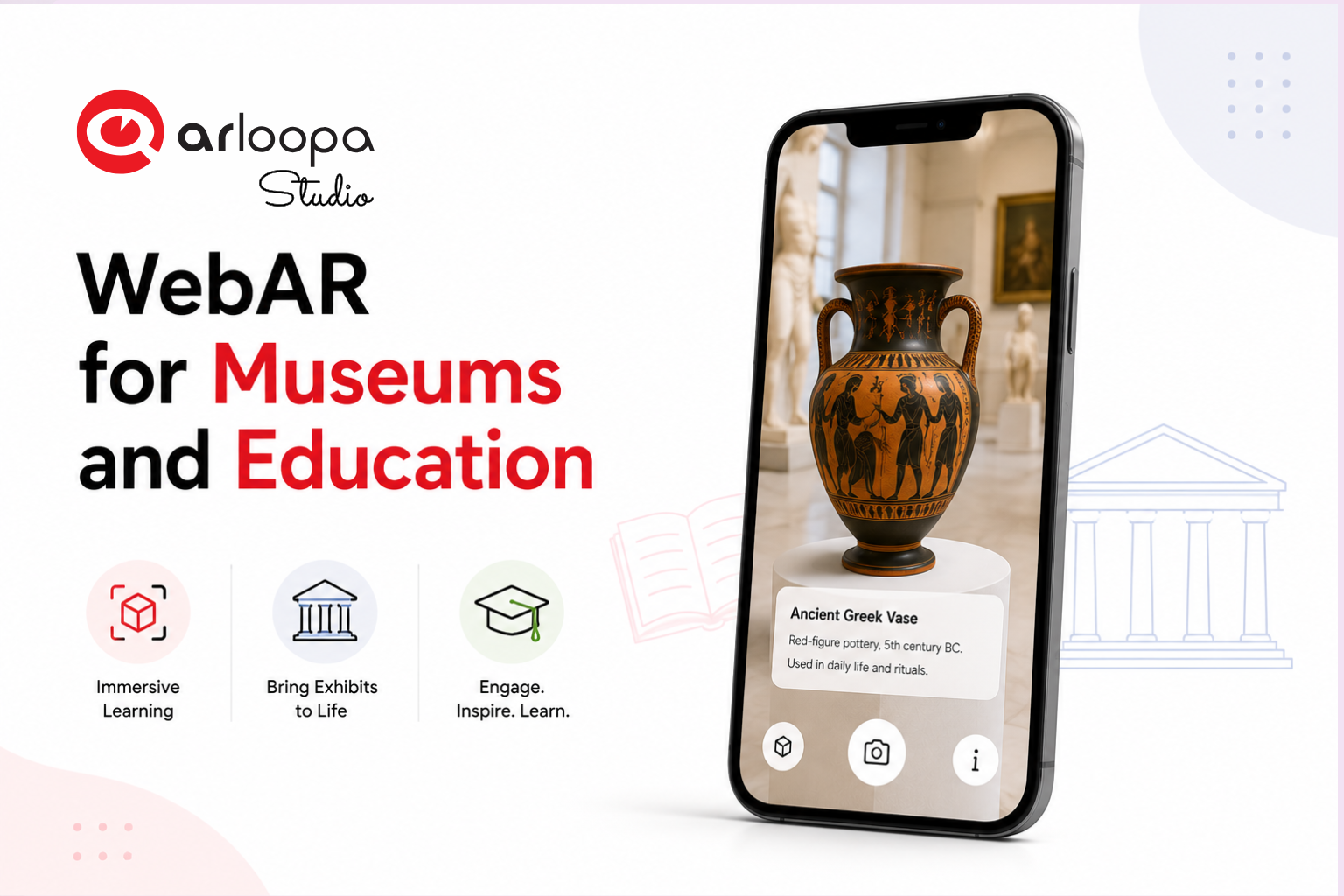
Museums and educational institutions are constantly looking for new ways to make learning more engaging, interactive, and memorable. In 2026, WebAR (Web-Based Augmented Reality) is emerging as one of the most effective tools for transforming how people explore history, science, art, and culture.
By allowing augmented reality experiences to launch directly in a mobile browser, WebAR makes immersive learning accessible to anyone with a smartphone - no app download required.
With ARLOOPA Studio, museums, schools, universities, and cultural organizations can create interactive experiences that turn static exhibits and educational materials into dynamic storytelling tools.
What Is WebAR?
WebAR is augmented reality delivered through a web browser such as Google Chrome or Apple Safari.
Users can simply scan a QR code or open a link to view 3D models, animations, videos, and interactive content overlaid on the real world.
Because there is no need to install an application, WebAR is highly accessible and easy to deploy across educational and cultural environments.
Why WebAR Is Ideal for Museums and Education
Traditional exhibits and textbooks often present information in a static format. WebAR turns learning into an active experience.
Visitors and students can:
- Explore 3D reconstructions of historical objects
- Interact with scientific models
- Watch artworks come to life
- Access multimedia explanations
- Participate in quizzes and games
This interactive approach improves engagement, comprehension, and retention.
WebAR in Museums
Museums can use WebAR to enrich exhibitions and create deeper connections between visitors and artifacts.
Popular Museum Use Cases
- Reconstruct damaged or incomplete artifacts
- Animate historical scenes
- Display 3D models of fragile objects
- Add multilingual audio and text guides
- Create interactive treasure hunts
- Provide child-friendly educational games
For example, an ancient vase can be shown in its original form, or a historical figure can appear as a virtual storyteller.
WebAR in Schools and Universities
Educational institutions can use WebAR to make lessons more visual and interactive.
Common Educational Applications
- Anatomy and biology visualization
- Astronomy and planetary models
- Historical reconstructions
- Engineering and architecture models
- Language learning experiences
Students can manipulate objects, explore complex systems, and learn through direct interaction.
Benefits of WebAR for Learning
Increased Engagement
Interactive content captures attention and encourages exploration.
Better Understanding
Complex topics become easier to grasp when presented visually in 3D.
Improved Retention
Hands-on experiences help learners remember information more effectively.
Accessibility
Students and visitors can access content instantly without downloading software.
Cost-Effective Deployment
Content can be updated digitally without reprinting materials or installing hardware.
Remote and Hybrid Learning Opportunities
WebAR is not limited to physical classrooms or museums.
Educational experiences can be shared through websites and QR codes, allowing learners to access immersive content from home or anywhere in the world.
This makes WebAR especially valuable for:
- Online courses
- Virtual museum tours
- Distance learning
- Educational marketing
Real-World Examples
Leading institutions such as The Smithsonian Institution and The British Museum have used digital and immersive technologies to expand access to collections and enhance educational experiences.
WebAR provides a scalable way for organizations of all sizes to offer similar interactive experiences.
How ARLOOPA Studio Creates Educational WebAR Experiences
ARLOOPA Studio has extensive experience developing immersive experiences for museums, schools, and cultural institutions.
Services include:
- 3D reconstruction and modeling
- Interactive storytelling
- Multilingual content
- Gamification
- QR code integration
- WebAR development
From historical exhibitions to classroom tools, ARLOOPA Studio helps organizations turn educational content into engaging digital experiences.
Ready to Transform Learning with WebAR?
Whether you manage a museum, school, university, or cultural institution, ARLOOPA Studio can help you create immersive WebAR experiences that inspire curiosity and deepen understanding.
Bring your exhibits and lessons to life with browser-based augmented reality.


See more articles



Solutions