
 Why Every Business Needs an AR Strategy in 2026
Why Every Business Needs an AR Strategy in 2026
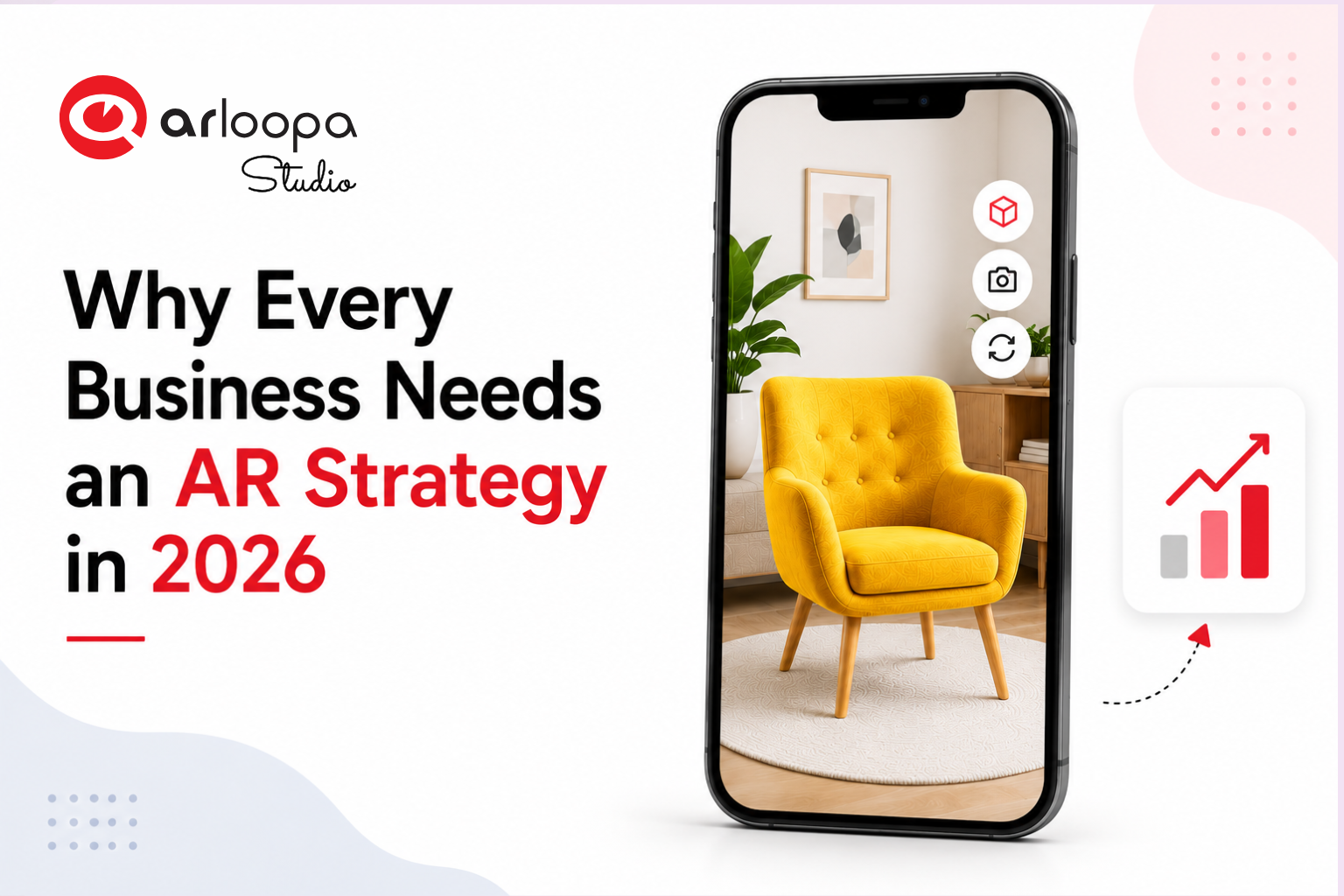
In 2026, augmented reality (AR) is no longer an experimental technology reserved for early adopters. It has become a practical business tool that helps companies attract customers, improve product understanding, streamline operations, and create memorable digital experiences.
From ecommerce and retail to real estate, education, tourism, and manufacturing, businesses across industries are integrating AR into their marketing and customer engagement strategies.
Companies that embrace AR today are gaining a competitive advantage by offering more interactive, personalized, and effective experiences.
With ARLOOPA Studio, organizations can develop tailored augmented reality solutions that align with business goals and deliver measurable results.
What Is an AR Strategy?
An AR strategy is a plan for using augmented reality to achieve specific business objectives.
These objectives may include:
- Increasing customer engagement
- Improving conversion rates
- Reducing product returns
- Enhancing training and education
- Strengthening brand awareness
- Driving customer loyalty
Rather than treating AR as a one-time campaign, a strategic approach integrates immersive experiences into the broader customer journey.
Why AR Matters More Than Ever in 2026
Several factors have made AR more accessible and impactful than ever before:
- Nearly universal smartphone adoption
- Growth of WebAR, which requires no app download
- Improved browser and mobile performance
- Lower development costs
- Better analytics and ROI tracking
- Increasing consumer familiarity with interactive technologies
As a result, AR has become a scalable solution for businesses of all sizes.
AR Is Changing Customer Expectations
Consumers increasingly expect to interact with products and brands before making purchasing decisions.
They want to:
- Visualize products in their own environment
- Try on products virtually
- Access immersive content instantly
- Receive personalized experiences
Businesses that provide these capabilities build trust and reduce uncertainty, leading to stronger customer relationships.
Key Business Benefits of an AR Strategy
Higher Engagement
AR captures attention by transforming passive content into interactive experiences.
Improved Conversion Rates
Customers who better understand products are more likely to make confident purchases.
Reduced Returns
Product visualization and virtual try-on help customers choose the right product the first time.
Stronger Brand Differentiation
Innovative experiences help brands stand out in crowded markets.
Measurable ROI
Modern AR platforms provide detailed analytics to track user behavior and campaign performance.
Industries Leading the AR Transformation
AR is delivering value across many sectors, including:
- Retail and ecommerce
- Real estate and architecture
- Education
- Healthcare
- Tourism
- Manufacturing
- Fashion and beauty
- Events and entertainment
Each industry is finding unique ways to use AR to solve business challenges and enhance user experiences.
Common AR Applications for Businesses
A well-designed AR strategy may include:
- WebAR product visualization
- Virtual try-on
- Interactive packaging
- AR advertising campaigns
- Educational experiences
- Real estate presentations
- Training simulations
These solutions can be deployed through websites, QR codes, mobile apps, and printed materials.
Why WebAR Is Accelerating Adoption
WebAR enables users to access augmented reality experiences directly through a browser, eliminating the need to install an app.
This provides:
- Faster access
- Higher participation rates
- Easier sharing
- Lower development and maintenance overhead
For many businesses, WebAR is the most effective way to introduce AR at scale.
How to Build an Effective AR Strategy
1. Define Business Goals
Identify what you want to achieve, such as increasing sales or improving customer engagement.
2. Choose the Right Use Case
Select applications that address real customer needs.
3. Create High-Quality Content
Invest in professional 3D models and intuitive user experiences.
4. Measure Performance
Track engagement, conversions, and ROI.
5. Scale Strategically
Expand successful pilots into broader initiatives.
Why Early Adopters Gain a Competitive Advantage
Businesses that adopt AR before competitors can:
- Build stronger customer relationships
- Establish innovation leadership
- Collect valuable data and insights
- Optimize experiences over time
As AR becomes a standard expectation, early adoption creates a significant strategic advantage.
How ARLOOPA Studio Helps Businesses Develop AR Strategies
ARLOOPA Studio works with brands and organizations to design, develop, and deploy custom augmented reality solutions.
Services include:
- AR strategy consulting
- WebAR development
- Product visualization
- Virtual try-on
- Interactive packaging
- Custom mobile applications
- Analytics integration
Whether you are exploring AR for the first time or scaling an existing initiative, ARLOOPA Studio can help you build a strategy that aligns with your objectives.
Ready to Build Your AR Strategy?
If you want to explore how augmented reality can support your business goals, ARLOOPA Studio can help you design and implement a custom AR strategy.
Turn your products, packaging, and marketing campaigns into immersive experiences that deliver real business impact.


See more articles



Solutions