




 AR vs MR: What’s the Difference Between Augmented Reality and Mixed Reality?
AR vs MR: What’s the Difference Between Augmented Reality and Mixed Reality?
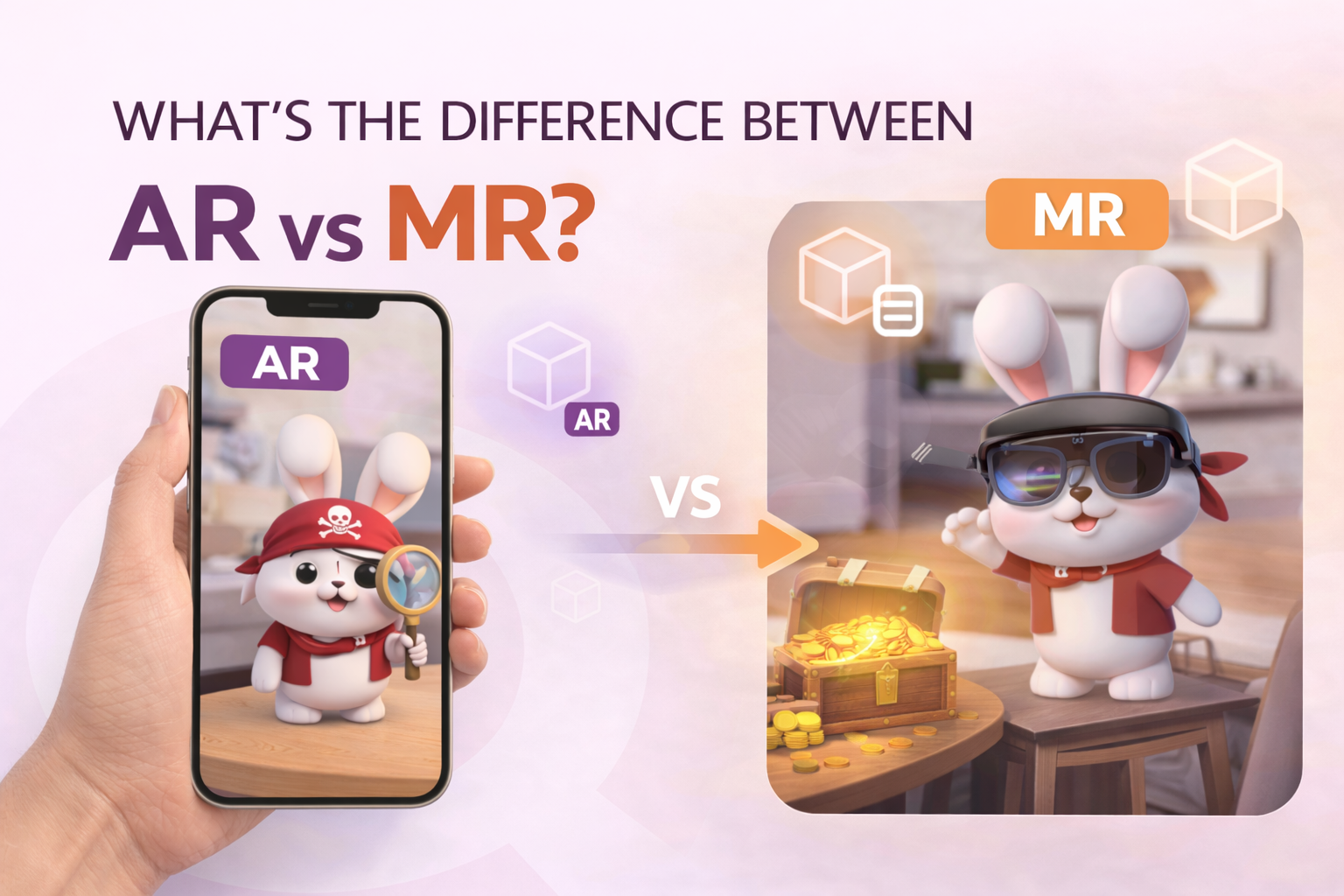
Immersive technologies are rapidly transforming industries like education, retail, marketing, and entertainment. Among the most popular technologies are Augmented Reality (AR) and Mixed Reality (MR).
Although the terms are often used interchangeably, AR and MR are not the same. Understanding the difference between them can help businesses and creators choose the right technology for their projects.
In this guide, we’ll explain AR vs MR, how they work, their key differences, and how each technology is used today.
What is Augmented Reality (AR)?
Augmented Reality (AR) is a technology that overlays digital content onto the real world using devices such as smartphones, tablets, or AR glasses.
Instead of replacing the real environment, AR enhances it with digital elements, including 3D models, animations, images, text, and interactive experiences.
For example, when you scan a poster with your phone and see a 3D animation appear on top of it, you are experiencing Augmented Reality.
Key Features of AR
• Adds digital content to the real world
• Works on smartphones and tablets
• Uses image tracking, location tracking, or surface detection
• Allows interaction with digital objects
Common Uses of AR
AR is widely used across industries:
Marketing and Advertising
Interactive product packaging, AR campaigns, and brand storytelling.
Education
Interactive textbooks, museum exhibits, and learning experiences.
Retail
Virtual try-ons and product visualization.
Events and Entertainment
AR games, filters, and immersive experiences.
Platforms like ARLOOPA Studio make it easy to create AR experiences without complex programming.
What is Mixed Reality (MR)?
Mixed Reality (MR) is a more advanced immersive technology that blends the real world with digital objects in a way that allows them to interact with each other in real time.
In MR experiences, virtual objects are not just placed in the environment — they can understand surfaces, respond to physical surroundings, and interact with real-world elements.
For example, a virtual robot placed in a room through MR could walk behind real furniture, react to walls, or interact with objects in the space.
Key Features of Mixed Reality
• Digital objects interact with the physical environment
• Real and virtual worlds are blended together
• Requires advanced sensors and spatial mapping
• Often experienced through specialized MR headsets
Devices Used for Mixed Reality
MR experiences typically require advanced devices such as:
• Microsoft HoloLens
• Magic Leap
• Advanced AR headsets
These devices map the physical environment and allow digital objects to behave realistically within it.
AR vs MR: Key Differences
Although both technologies combine digital and real-world elements, their capabilities are different.
| Feature | Augmented Reality (AR) | Mixed Reality (MR) |
|---|---|---|
| Interaction | Digital objects overlay the real world | Digital objects interact with the real world |
| Hardware | Smartphones, tablets, AR glasses | Specialized MR headsets |
| Environment awareness | Limited | Advanced spatial understanding |
| Accessibility | Highly accessible | More specialized technology |
| Complexity | Easier to create and deploy | More technically complex |
In simple terms:
AR adds digital content to the real world, while MR blends digital and physical environments so they can interact.
When Should You Use AR?
Augmented Reality is ideal when you want to create interactive digital experiences that are easy for users to access.
Since AR works on smartphones, it can reach a much larger audience.
AR is commonly used for:
• marketing campaigns
• educational content
• retail product visualization
• AR games and treasure hunts
• social media experiences
With tools like ARLOOPA Studio, creators can design AR experiences quickly and publish them for mobile devices.
When Should You Use Mixed Reality?
Mixed Reality is better suited for situations where advanced spatial interaction is required.
MR is commonly used in:
• industrial training
• engineering simulations
• medical visualization
• architectural design
• complex collaborative environments
Because MR often requires specialized hardware, it is currently more common in enterprise and professional applications.
The Future of AR and MR
Both Augmented Reality and Mixed Reality are expected to play major roles in the future of immersive technology.
As hardware improves and becomes more accessible, the line between AR and MR may continue to blur.
Technologies like spatial computing, AI, and real-time environment mapping will make immersive experiences even more powerful.
For businesses and creators today, Augmented Reality remains the most accessible and scalable solution, especially for marketing, education, and entertainment.
Start Creating AR Experiences with ARLOOPA Studio
If you're interested in building immersive experiences, ARLOOPA Studio makes it easy to create powerful AR content.
With ARLOOPA Studio, you can build:
• AR marketing campaigns
• interactive educational experiences
• AR treasure hunts and games
• interactive product packaging
• engaging storytelling experiences
No advanced coding required.
Bring your ideas to life and start building Augmented Reality experiences today.


See more articles



Solutions